
Where Do We Go From Here? Past, Present, and Future of the All Nations Cup
By Betty Finke
Within the ever changing world of Arabian showing, the All Nations Cup has long held the position of a rock surrounded by rushing water. Unlike most other shows, the ANC has remained in the same place on the same date for the last two decades, making it a firm fixture in the calendar of Arabian horse lovers around the world. Both for this and for its concept, it is unique.
The 2025 All Nations Cup was the 41st, which also makes this one of the oldest continuously held international Arabian shows in Europe. The World Championships at Paris may date back farther, but the ANC was everyone’s favorite show. It has been referred to as “the real World Championships,” and it is one of the three ECAHO A shows that make up the prestigious European Triple Crown. That prize was first won in 1994 by the US-bred stallion Essteem (Fame VF x Espressa). The first female, and in fact the first European-bred, Triple Crown winner was his daughter Essteema, five years later. Many other distinguished horses have won this prize, but – here’s the thing – I honestly can’t remember when a horse last won that title. In fact, I believe the European Triple Crown is a thing of the past. We’ll get to the reason shortly.
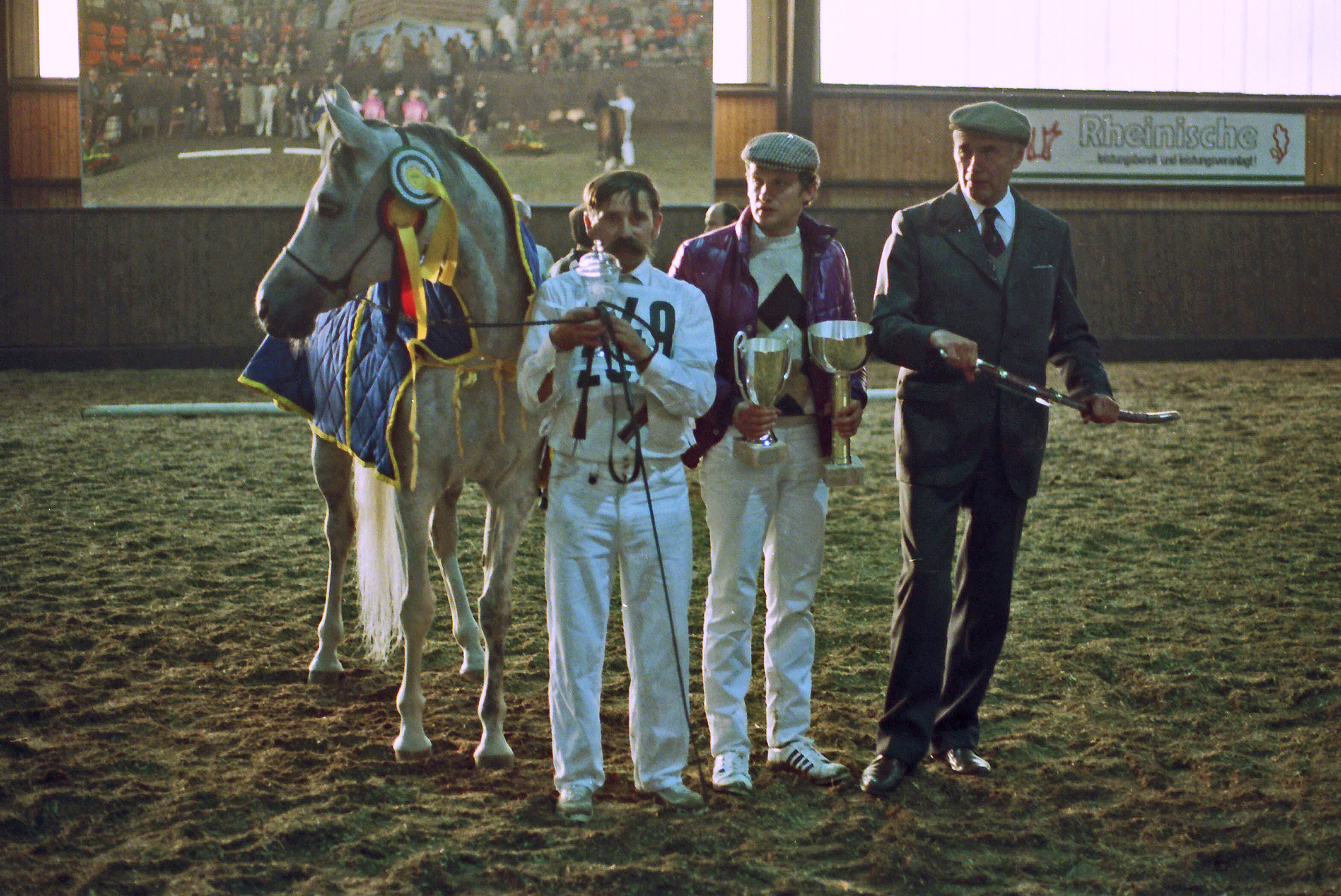 Poland winning at Aachen in 1984 with Zazula (Negatiw x Zlota Iwa).
2025 also saw the passing of Annette Hedley who, together with her husband Major Ian Hedley, first conceived the idea of the All Nations Cup over 45 years ago and remained a board member of the ANC Committee to the last. This show is a part of her legacy. The Hedleys were pioneers: they were the first European breeders to import a Babson stallion from the U.S. – The Shah, who had an enormous impact on Arabian breeding in Britain – and they came up with a completely new show concept, one that awarded prizes not only to individual horses, but a perennial trophy to the best exhibiting country.
Back in 1980, it was an idea that caught on, eventually making the ANC one of the most popular Arabian shows in Europe and beyond. It kept this status all through the first 20, even 30 years of its existence. Since the turn of the century, however, the landscape of Arabian showing has been changing, and inevitably the ANC has changed with it. It happened slowly and subtly and many may not even be aware of it; but if you were there from the start, the difference is obvious.
The ANC has long been synonymous with the German city of Aachen, its permanent venue since 1987. Most of you probably only know it like this. But it was not originally intended to be that way. The original idea was for the show to move to a different country each year, and for the first seven years, it did. The very first ANC, in 1980, naturally took place where the idea originated: in Britain, following the British Nationals at Ascot. There weren’t many foreign entries other than some from Om El Arab, then in Germany (who won), and a few from Poland (who were largely ignored). The show then moved first to Spain and from there to Sweden. At this point it looked as if the host country would win the Cup as a matter of course, if only because the local entries naturally outnumbered the foreign ones. But this changed in 1983, when the show returned to Ascot with a lot more international entries and Spain emerged as the winner.
In 1984, the ANC came to Aachen for the first time. You may not know this, but an international Arabian show already had been established at Aachen since 1979. Those pre-ANC shows were huge events with enormous halter classes and performance competitions. Every German breeder who had a name took part; you could go there and see most of the breeding stallions in the country all in one place. Those shows were true festivals of the Arabian horse in all its versatility.
In 1984 then, the ANC followed the German Nationals at Aachen. It was also the year the show moved indoors. Both the ANC and the show at Aachen had been held outside until 1984, when torrential rain forced the show to move into the indoor arena. It was held outside only one more time, in 1985 in Switzerland; but when the show returned to Aachen in 1987, it came to stay and has remained there ever since, which also means it remained indoors.
Most of you will not remember that indoor arena as it was then, either. It was huge. VIP areas hadn’t been invented yet. Those big moving Polish and Russian horses that dominated the shows back then had lots of space to show their paces and show them they did, much to the delight of the spectators that filled the grandstands. Also, back then trainers were still capable of trotting a horse once around the entire ring without breaking stride, an ability that has somehow been lost.
The grandstands were packed in the 1980s and 1990s. If you wanted a seat, you had to be there early. The ANC was the show everyone went to, an occasion to meet up with old friends, make new ones, and see the best Arabian horses in the world in all their glory and all their variety. You could walk through the stables and see the horses up close, no curtains hiding them from view; you could go into the collecting ring where the horses waited quietly, no one chasing them with whips and bags to heat them up for the show. That wasn’t the way we did things back then.
Polish horses have been a fixture at Aachen ever since 1983, even predating the arrival of the ANC. The mares from Poland won everything that year. Poland came back with a different lot of mares in 1984 and won the ANC for the first but not for the last time. When the show had its 30th anniversary in 2019, Poland had won the Cup no less than 10 times (followed by Belgium with 7 and Britain with 5 wins) and had bred 60 champions, with Michalow the leading breeder of winners and the second most successful exhibitor.
Aachen had its stars, horses beloved by everyone and celebrated by the spectators like rock stars. Plakat, the Russian stallion who won the senior stallion championship at the first Aachen ANC in 1984, returned in 1992, now age 22, to do it again. Kubinec, who never won the gold champion title, was a firm favorite with the audience all the same and, on one memorable occasion, performed an impromptu trotting duel with another big-moving Russian stallion, Vodolej, bringing down the house. And everyone loved the mares from Poland. Those unforgettable gold-winning Polish mares – Emanacja, Kwestura, Zagrobla, Eldorada, Emandoria and of course Pianissima – are as inextricably linked to Aachen as the triumphal march from Aida that accompanied the horses entering the ring in each class. If any show has a theme song, Aachen has. It is one of this show’s traditions, like the parade of flags that precedes the championships. In the early 1990s, there was an after show party where everyone – exhibitors, handlers, judges, spectators – was invited into the ring for free drinks. On one occasion, even the senior champion stallion joined the fun. It was like an annual meeting of a big international family and, like the flag parade, it symbolized the core idea of the All Nations Cup: people from different countries all around the world coming together in peaceful competition, united by their love for the Arabian horse.
Looking back from the perspective of 2025, the only things that remain of those days are the flag parade and the march from Aida. But the flag parade no longer includes horses, and the march is only heard during the championships, not the classes.
The changes started in 2000 when the first VIP area was installed, making the ring just a bit smaller. Not small enough to make a great difference; those Polish mares – and Ekstern, who was gold champion stallion that year – still had plenty of room to trot. Five years later, a second VIP section lined the opposite side of the ring, cutting off another chunk. Today there is only one side of the arena – where the horses come in – that isn’t lined with VIP seating. The biggest VIP section is four tiers high, cutting off a large part of the arena as well as completely blocking the view from the cafeteria. You used to be able to have a snack or eat your lunch there while watching the show, but that’s long past (unless, of course, you’re a VIP and get your food brought to your ringside table).
The VIP areas are now the only spectator areas that are well-filled. Finding a seat on the public grandstand is easy these days; in fact the short side is often entirely empty. Only two kinds of people come to the show now: a few hardy souls like myself, who have been there from the start and will continue to be there, and those owners and connections that aren’t in the VIP section (which isn’t many). It is even worse for the performance classes, which take place outside parallel to the show and have almost no audience at all. And if some of those performance horses come into the indoor arena to give a display, many of the VIPs get up and leave. Versatility isn’t something show breeders are interested in any longer.
Mostly, people seem to be interested exclusively in their own horses. Any cheering is localized. It’s not often that you get spontaneous eruptions of applause from the entire audience like you used to. You don’t often get people cheering for their own country’s entries, either. What happened to the team spirit? It used to be that for the ANC, some countries would put together teams, like in the Olympics, and cheer each other on; but that, too, is a thing of the past.
The ANC reached its apex in the years 2016-2019, when the late Wolfgang Eberhardt, show director at the time, introduced innovations that included gelding classes (with sponsored prize money), a Festival Lounge with music and art shows, the ANC Plaza with shopping stalls and an arena for stallion and sales horse presentations, a vote-to-win lottery, crowd-favorite voting, spotlights, laser shows, and guest star performers. The All Nations Cup was now the All Nations Cup Festival.
At the peak of all this, the pandemic struck. When the show returned after an enforced two-year hiatus, the organizers decided that all those extras threatened to sideline what the show should really be about: the horses. All that remained of the innovations were the Lounge (now the hospitality tent) and the gelding classes. These proved to be very popular and the number of entries has remained constant during the past years. But other than that, numbers have been going down.
For many years, the ANC, unlike other European shows, still had over 100 entries, but that has changed. For the past two years, they have dropped beneath 100 and classes are shrinking. The yearling filly classes had 25 entries in 2019; they were down to 15 in 2025. The classes for 11 years old and older horses, once the highlights of the show, have been down to two to three entries for several years now.
Most tellingly, perhaps, although the show is held in Germany, you will barely see any German entries. Most German breeders have turned their backs on modern showing, and even the show breeders seem to have lost interest. You’re more likely to find them at the EBT auction across the road than at the show. In fact, the German Nationals, which preceded the ANC for many years, were cancelled this year because there were barely any entries.
This didn’t happen overnight. It is the result of a development that began over half a century ago, when the Middle Eastern countries rediscovered their horses and got into showing in a big way. They bought the best European (and also American) horses, so they could breed the best. You might blame the European breeders for letting those horses go; but who would pass by such an opportunity? Parallel to the Middle Eastern show activities increasing, those in Europe declined, until we have reached a point where the show rings of Europe are completely dominated by Middle East horses, many of which reside at European training stables. Other than Poland, no European country even tries to compete against them anymore. Poland still holds the ANC record, having won the Cup a total of 10 times since 1984, but the Emirates are rapidly catching up with eight wins as of 2025. In fact they have been winning it regularly throughout the past years, with only Qatar interrupting the series in 2023. Countries like Britain or Germany, who won the Cup five and three times, respectively, don’t even try anymore; Poland at least still makes an effort. In 2025, they actually came very close. If it had been like it used to be, when only class winners could become gold champions, they’d have won. But now we have open championships, and while the Polish mares won all their classes, they were passed over when it came to the titles.
And here’s the reason why the European Triple Crown is thing of the past. The European Championships are the only one of the Big Three without Middle East horses, and with the way things are now, European horses rarely win Gold at the ANC or the World Championships. It isn’t impossible of course, but highly unlikely.
In an attempt to boost the numbers, the newly created ANC Straight Egyptians was moved to Aachen in 2024. I attended this show when it was first held in Kuwait in 2020, and the difference couldn’t have been greater. In Kuwait, classes were huge; they needed an entire day just for the juniors. And those were only entries from Middle East countries. Classes at Aachen were so small, all the horses qualified for the championships. Since the championships are open, you might as well have skipped the classes and gone straight to the finals (and this also applied to some of the regular ANC classes!). And while there were a few token entries from Germany and Italy, most of the horses were still from the Middle and Near East. Granted, there were a few more entries in 2025 than in 2024, but not nearly enough to justify calling this a “Nations Cup.”
And while we’re on the subject of nations, the most troubling aspect in 2025 was a disturbing development that has nothing to do with horses. Remember the idea of different nations peacefully united by their love of the Arabian horse? The ANC used to be a show where politics were left behind at the door. This year, an incident on Friday involving Israelis and Palestinians led to security guards being posted in several prominent places throughout the weekend. That has to be an all-time low.
And now there’s GCAT, a new big player entering the field. Where the ANC ditched the spectacle, GCAT embraces it wholeheartedly: red carpets, spectacular dance displays, celebrity concerts, fireworks. Plus there’s huge prize money, so it’s not surprising it draws exhibitors away from the ECAHO shows. Some big name competitors of the past, like Al Shaqab, were missing this year; others, while they were there, didn’t bring their top horses. Sure, GCAT also sponsors ECAHO shows and was a main sponsor of the ANC this year – but a major GCAT show took place on the same weekend as the ANC and some of the most successful show horses of 2025 didn’t compete at Aachen at all.
At this point, we can only speculate were all this will lead. If the big players are drawn away by the lure of the GCAT prize money and spectacle, it could mean the end of the big ECAHO shows. It could also be a chance for European showing to recover and stand on its own feet again. On the other hand, you can’t do shows without sponsors, least of all A shows like the ANC. How can it continue under these circumstances?
I honestly don’t know, but I hope it does. Like a partner after several decades of married life, the show may have lost some of its initial appeal and developed some irritating quirks, but I can’t help still loving it. Besides, that central idea of all nations coming together to celebrate something they all have in common is still important – now perhaps more than ever.
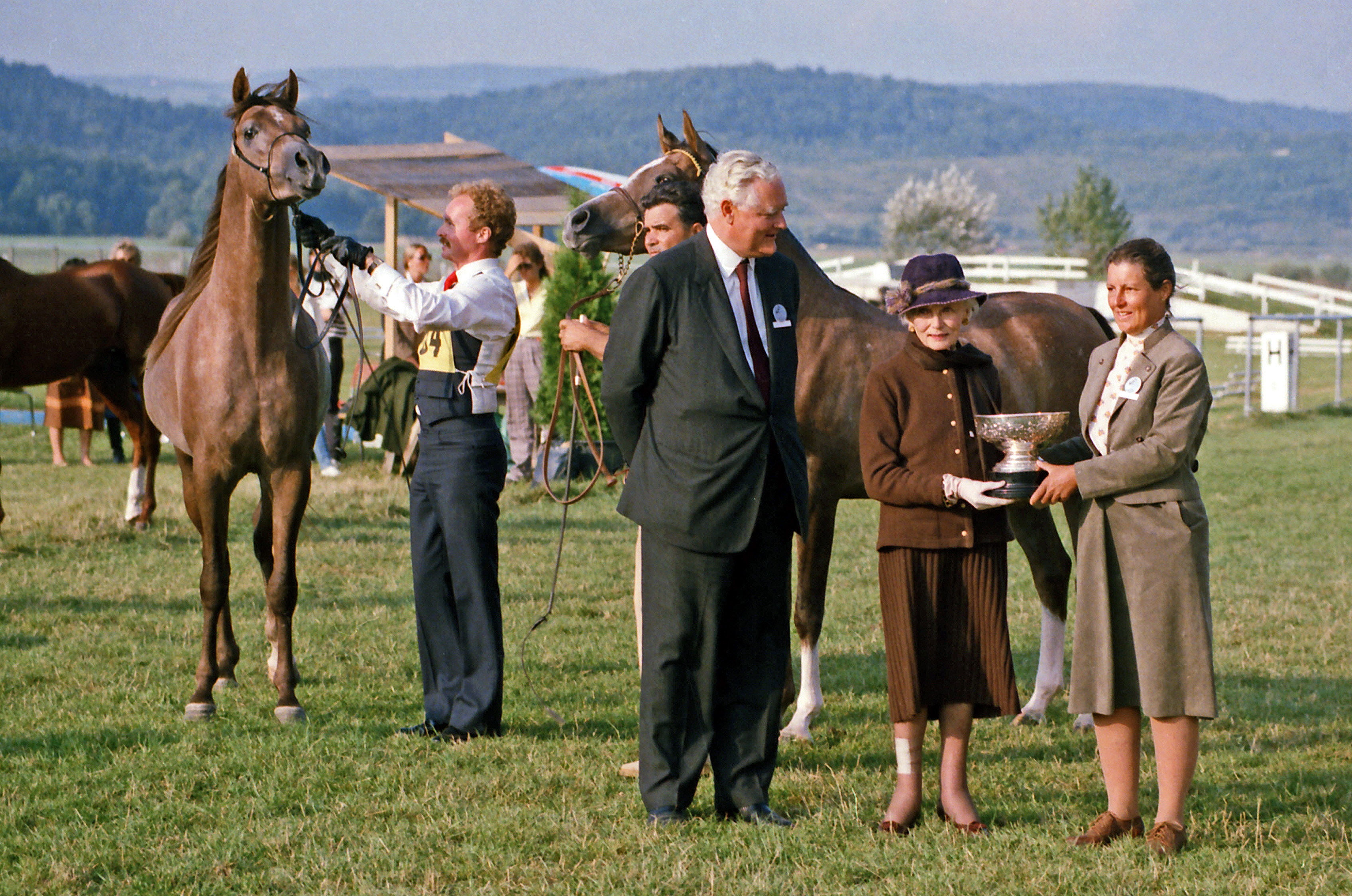 Spain winning in Switzerland in 1985. At right with the Cup, Margaret Lady Harmsworth Blunt and the Marquesa de Laula.
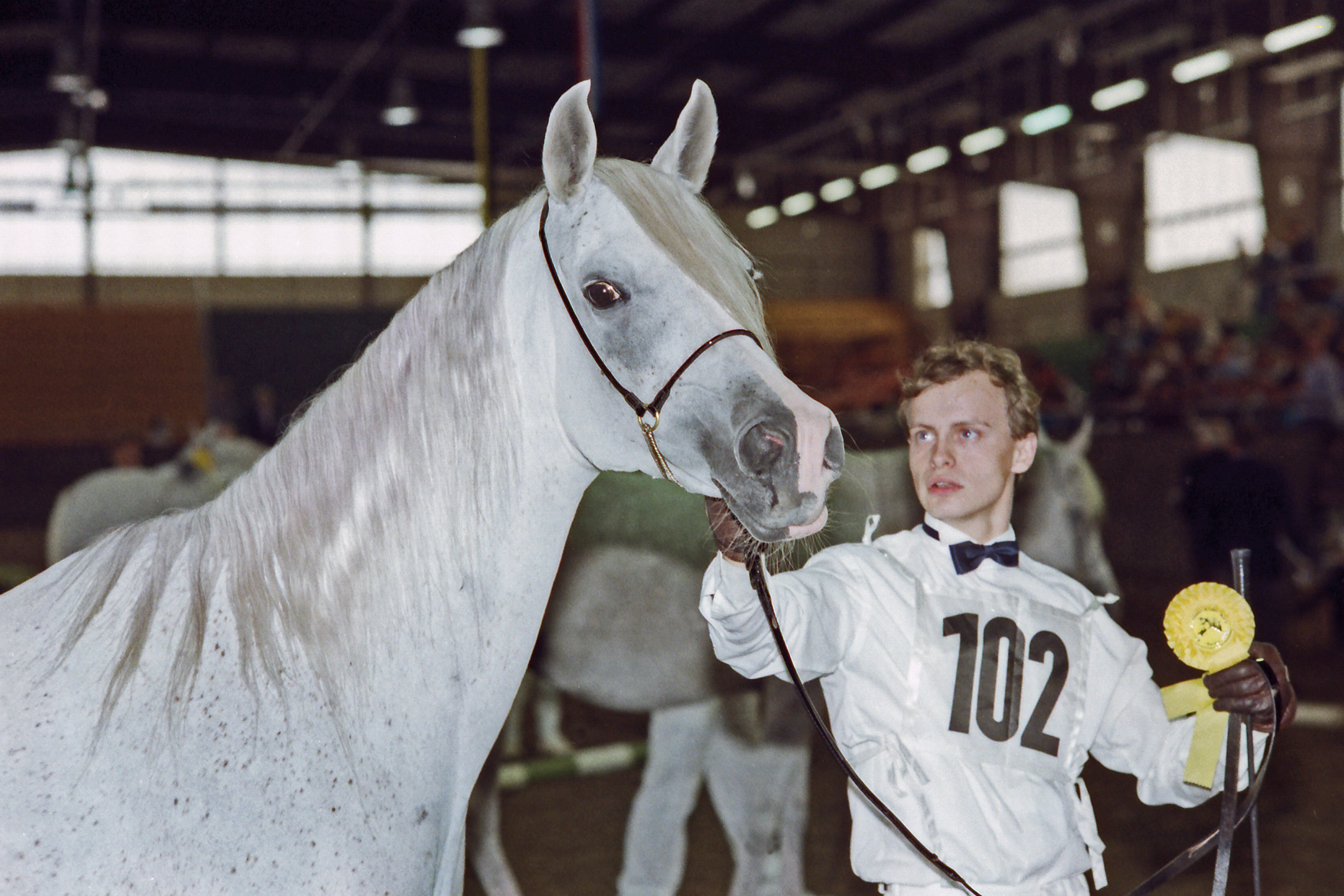 Mangani (Nuri Schalan x Metelica), Senior Female Champion for Germany in 1987.
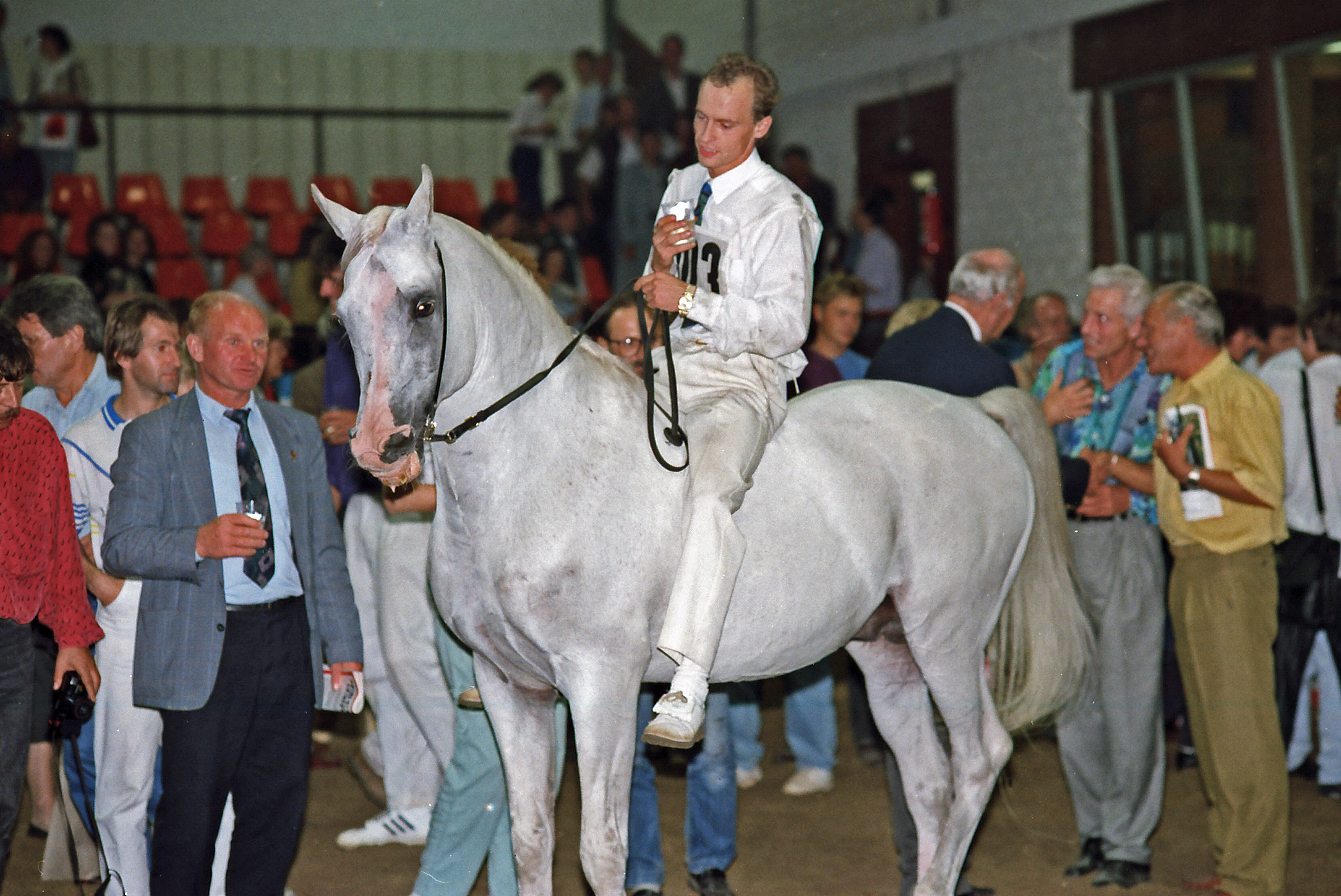 Plakat (Aswan x Pchelka) joining the after show party in 1992, having won his second Senior Male Champion title.
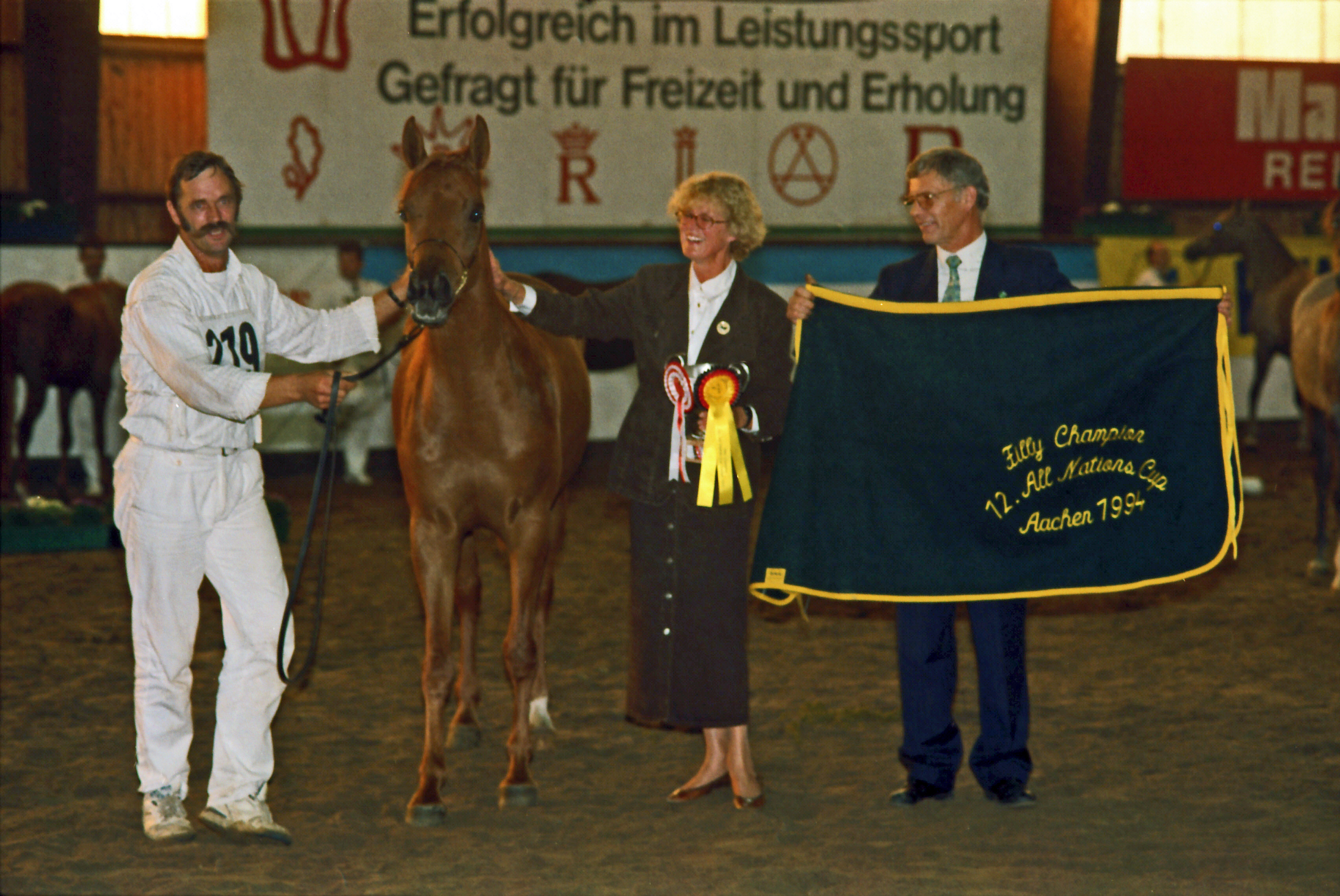 Jan Calis, left, was a fixture at Aachen until his death in 2019. In 1994 he showed Spain’s Braken (Fakateko x Banika) to Junior Female Champion.
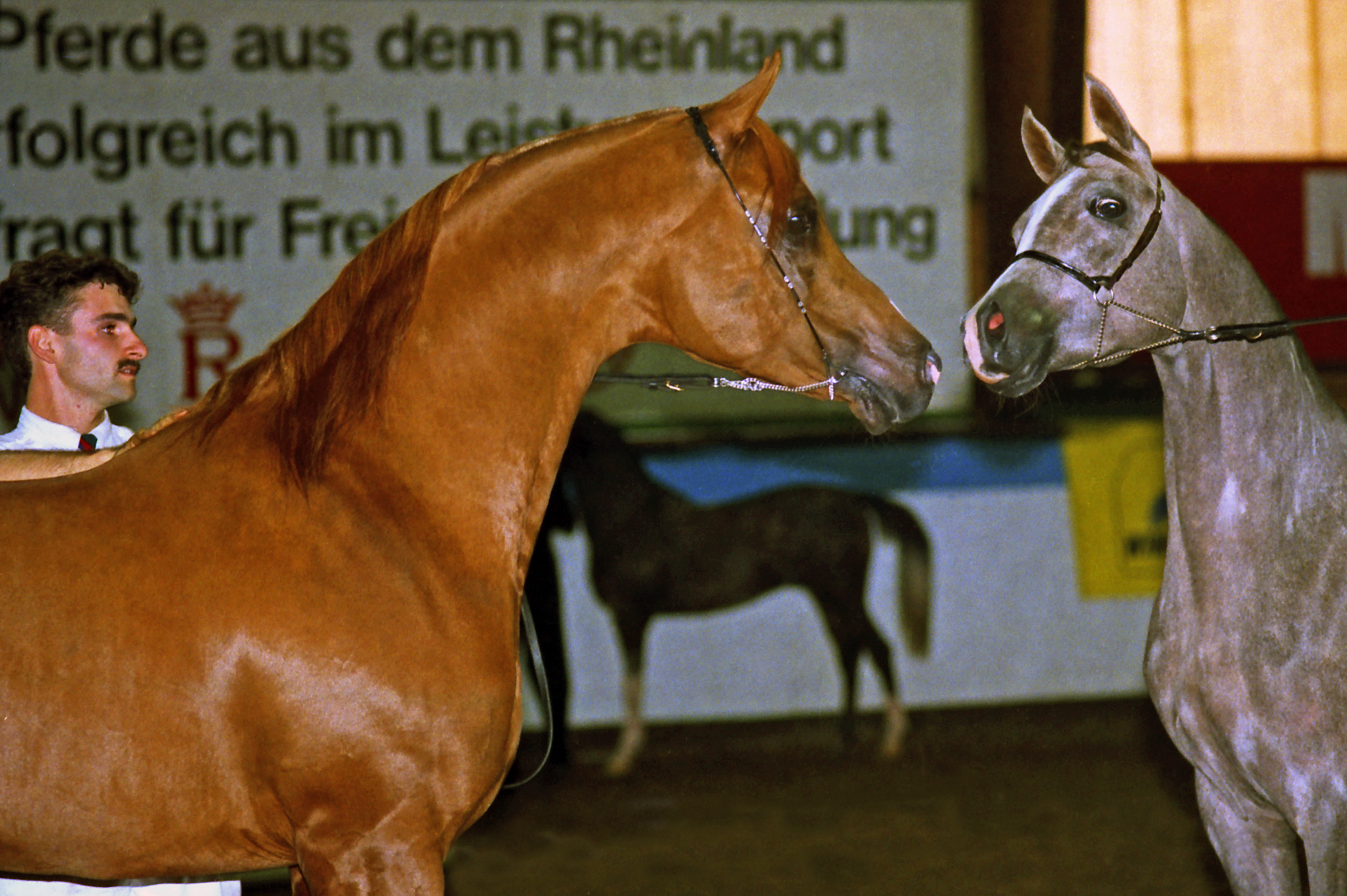 The first ever European Triple Crown winner Essteem (Fame VF x Espressa), winning Junior Male Champion at Aachen in 1994.
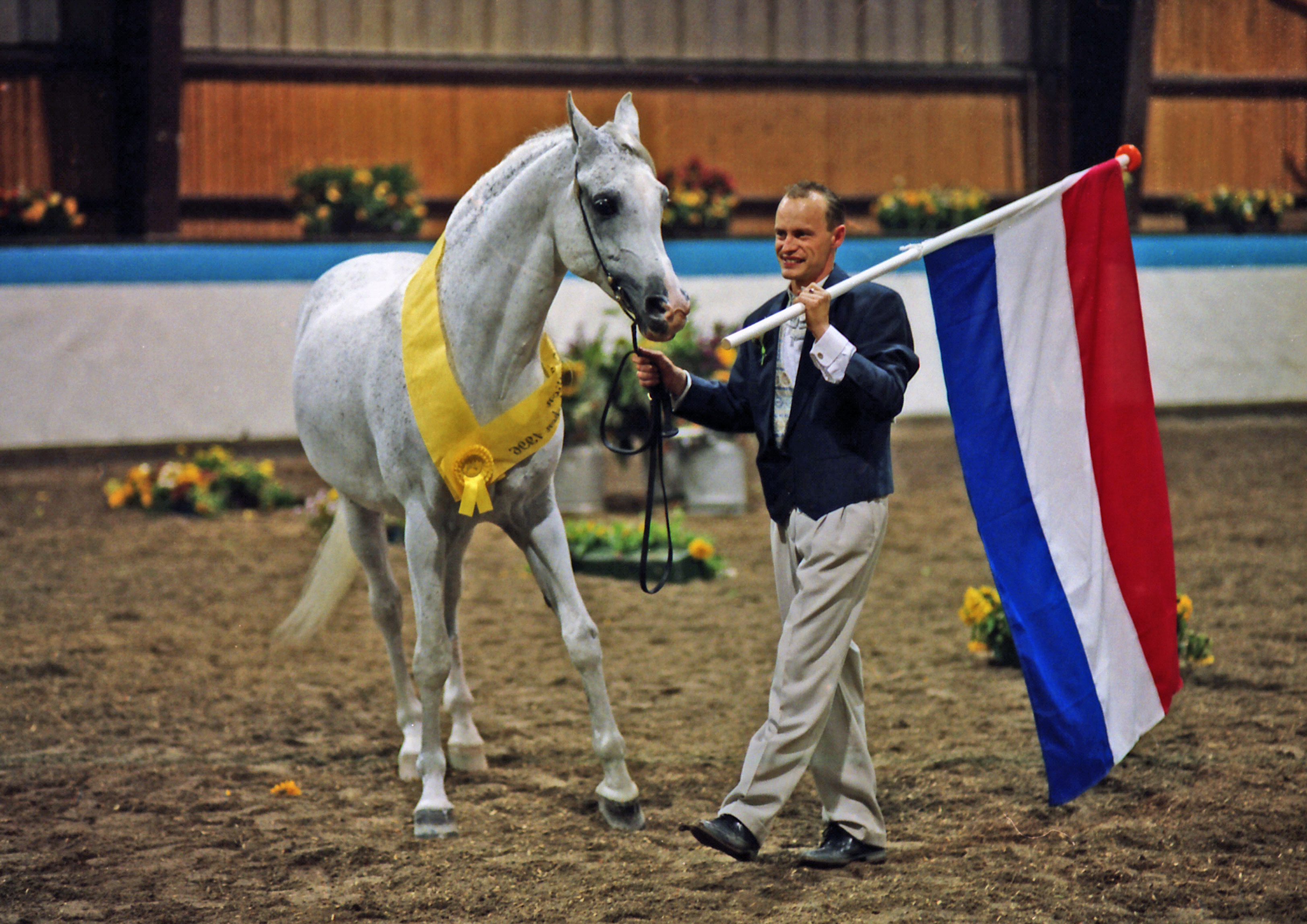 Eric Dorssers and Focus Khemali (Ruminaja Ali x Mi-Coytina), winning Senior Champion Stallion for Holland in 1996.
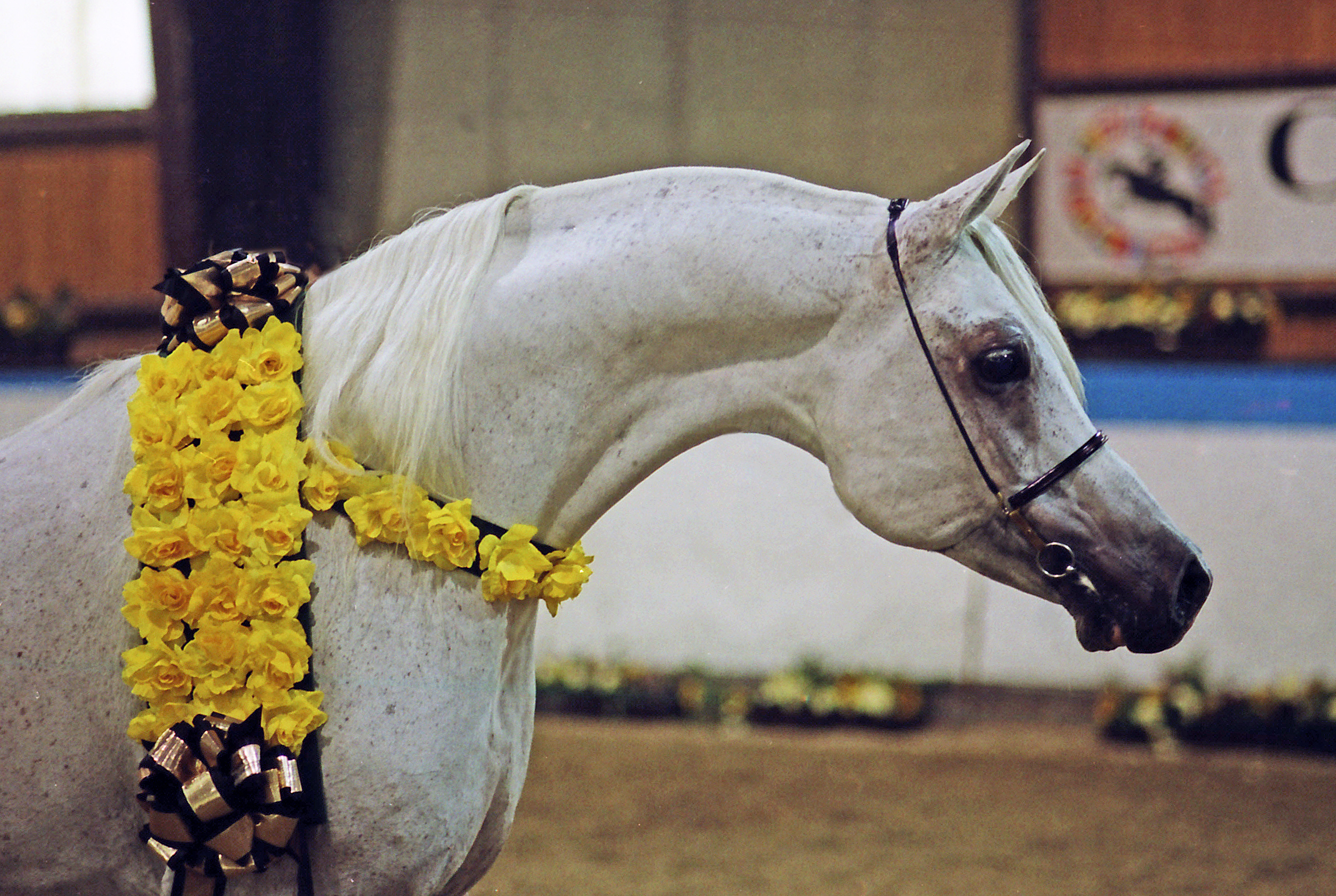 Hadidi (Norus x Hebet Allah), Senior Male Champion in 2001.
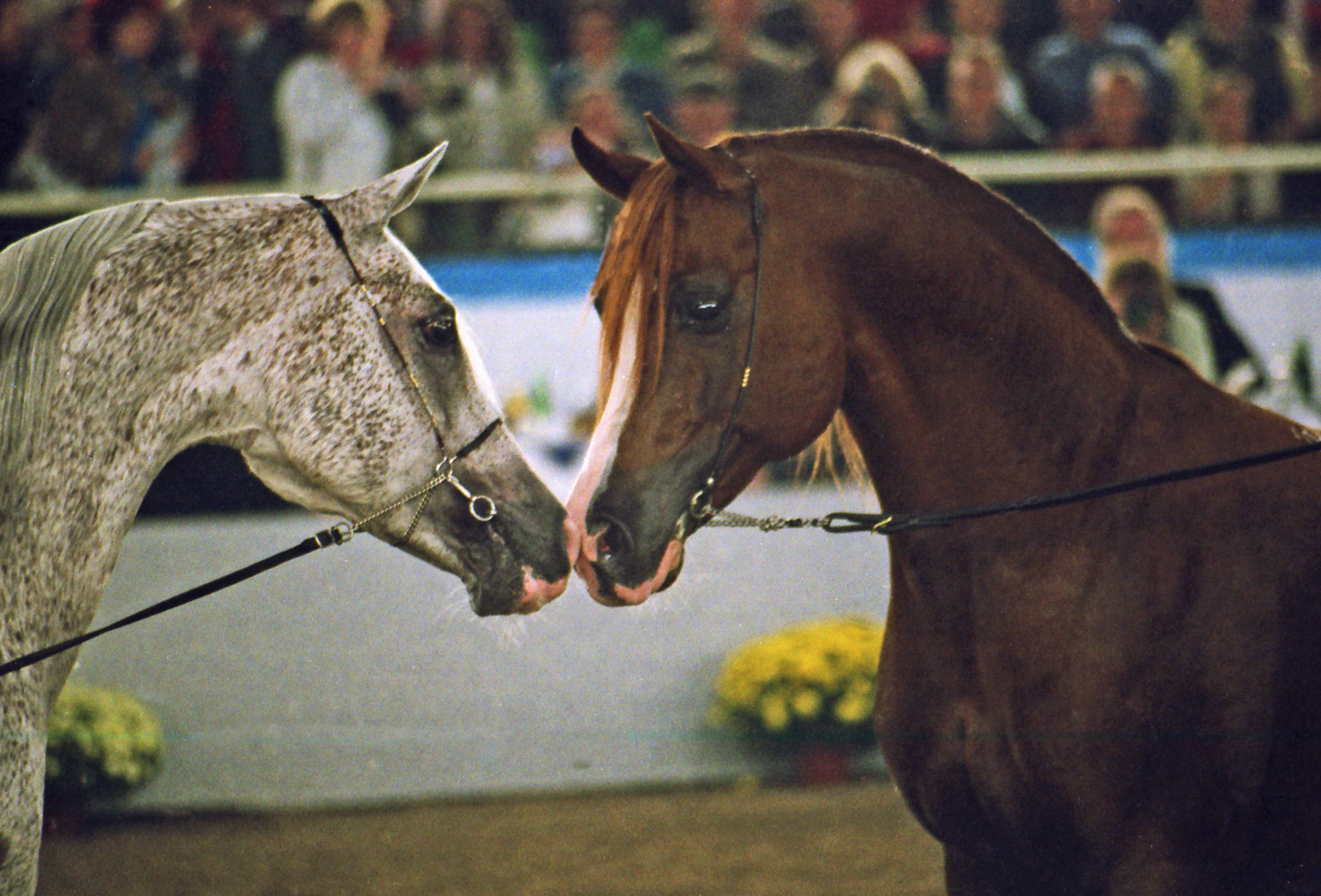 Vodolej (Mashuk x Mechta) and Kubinec (Balaton x Kosmetika) in 2004 - two crowd favorites, though neither of them ever was Champion at Aachen.
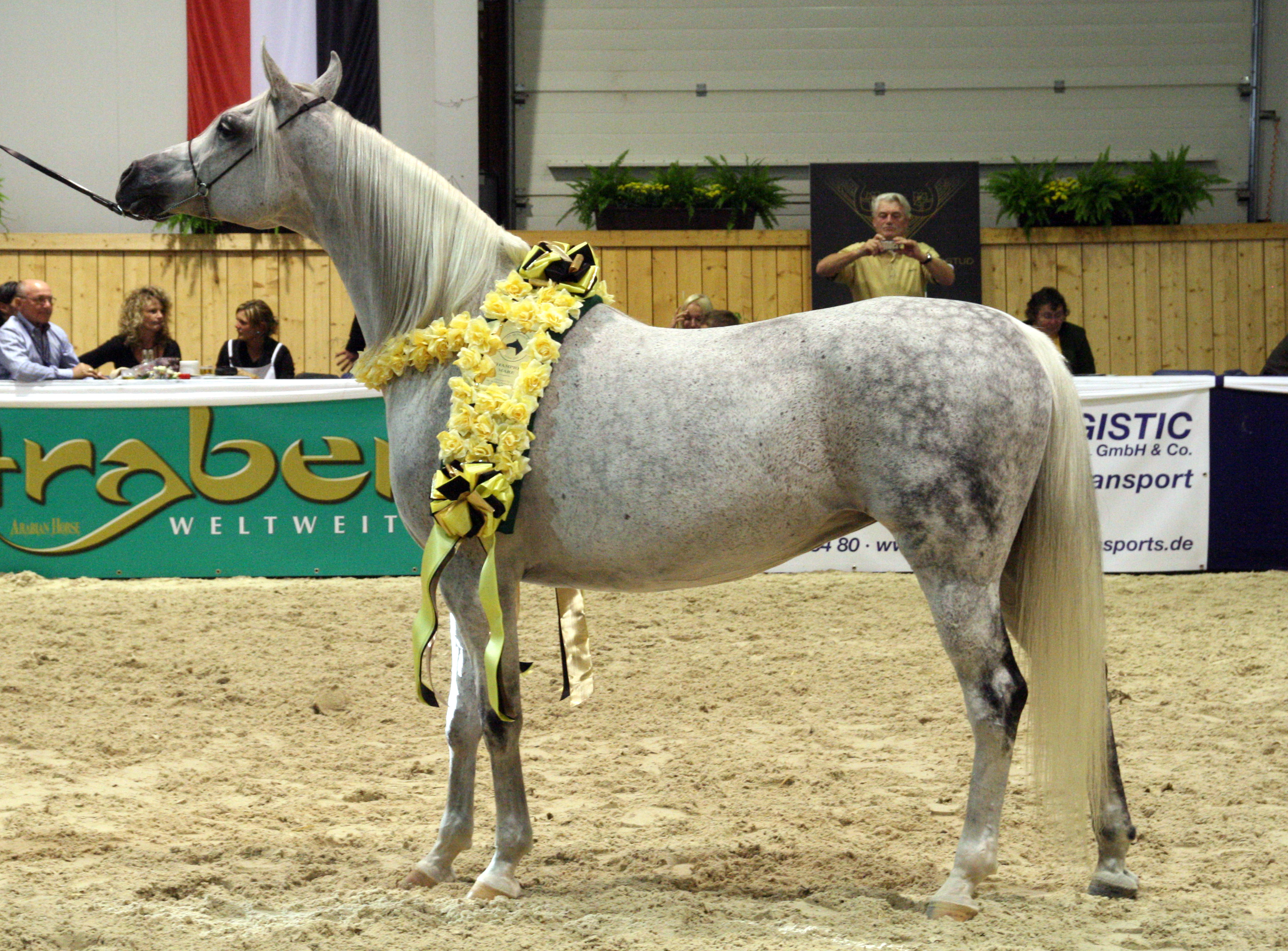 Palmira (Monogramm x Palestra), Senior Female Champion for Poland in 2007.
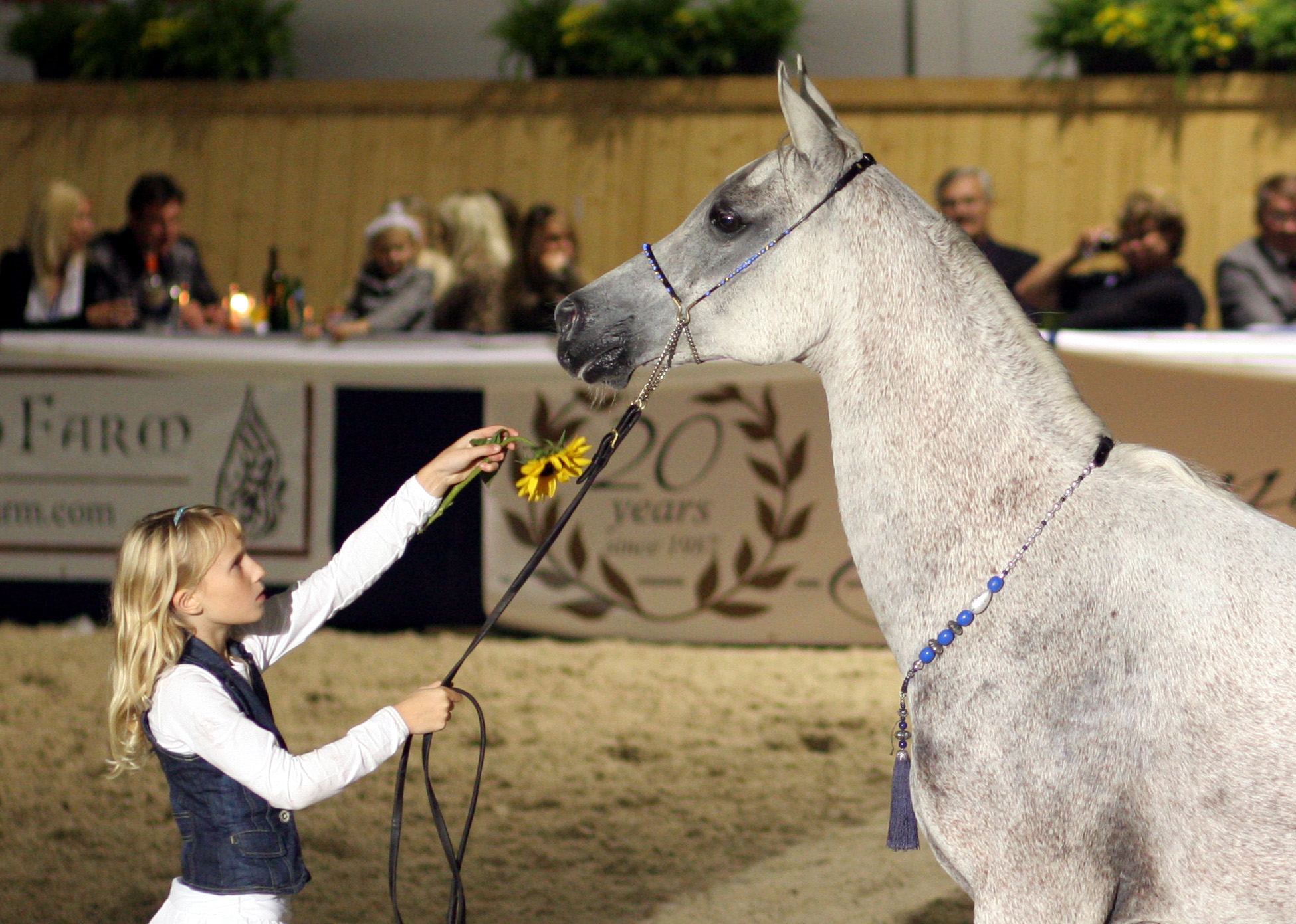 Tara den Hartog in 2007 with Popova (Podsnejnik x Poliana), who was Junior Female Champion in 1984 and 1985.
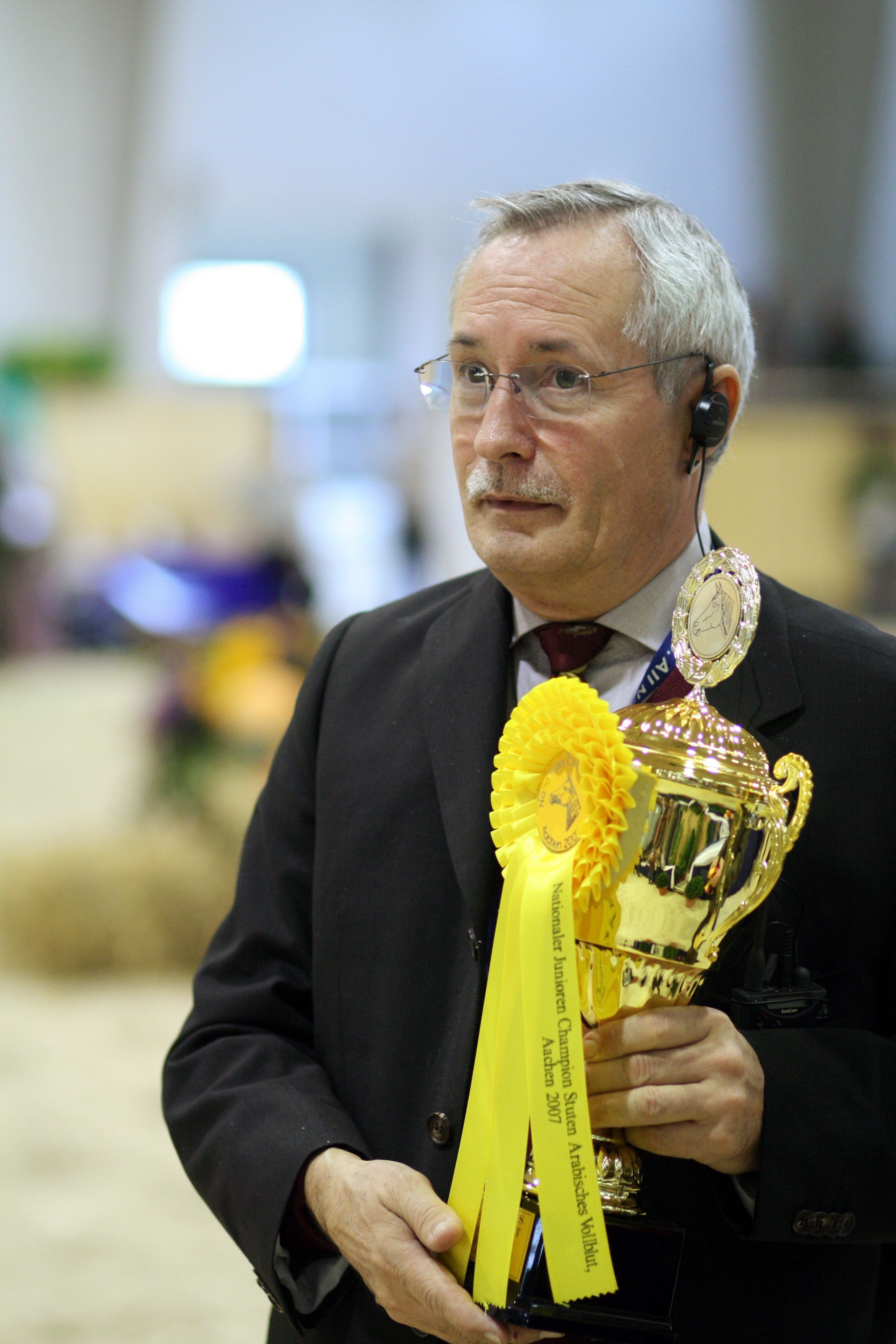 Wolfgang Eberhardt, many years show director of the All Nations Cup.
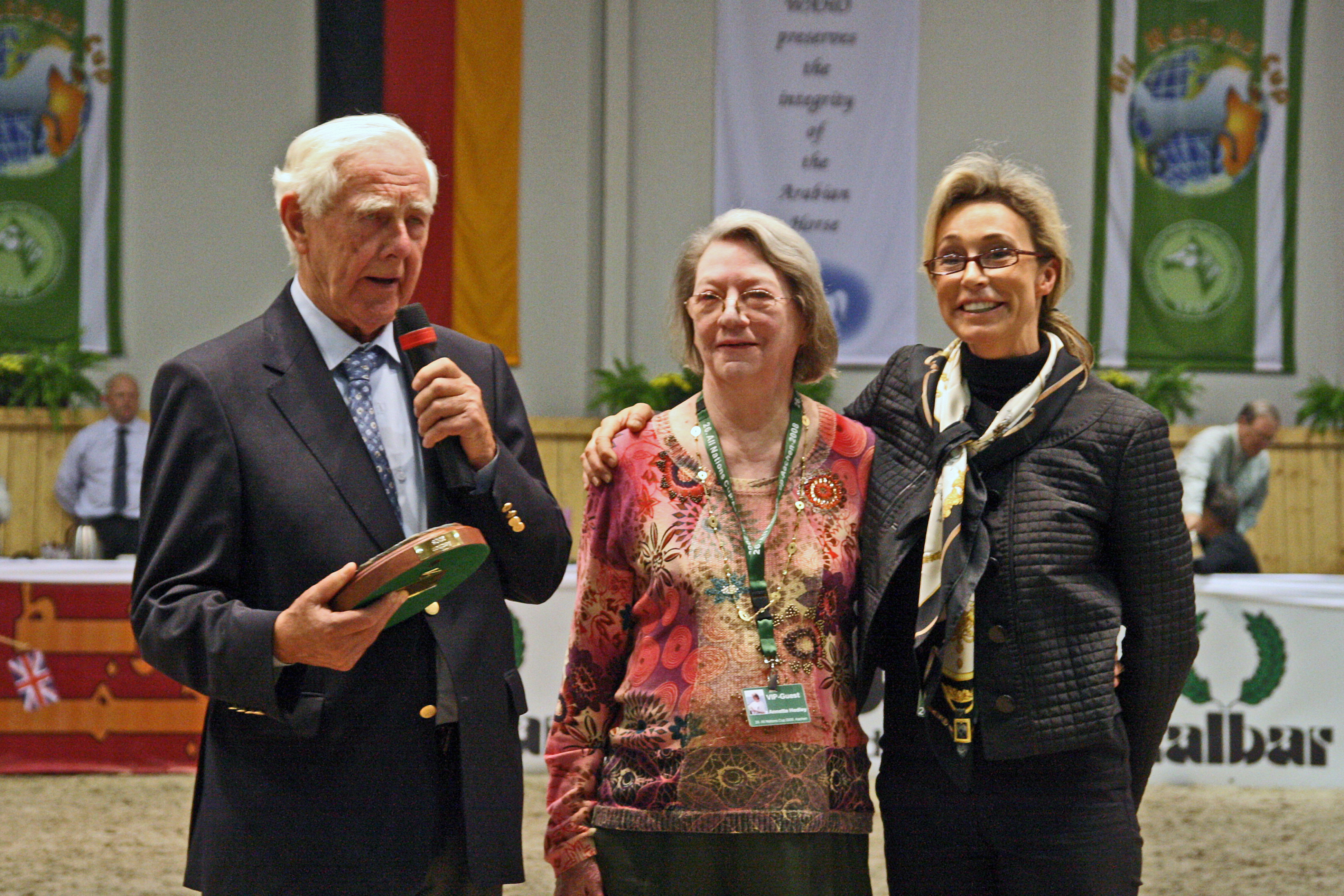 Annette Hedley, flanked by fellow ANC Committee members Dr. Hans Nagel and Sylvie Eberhardt, in 2008.
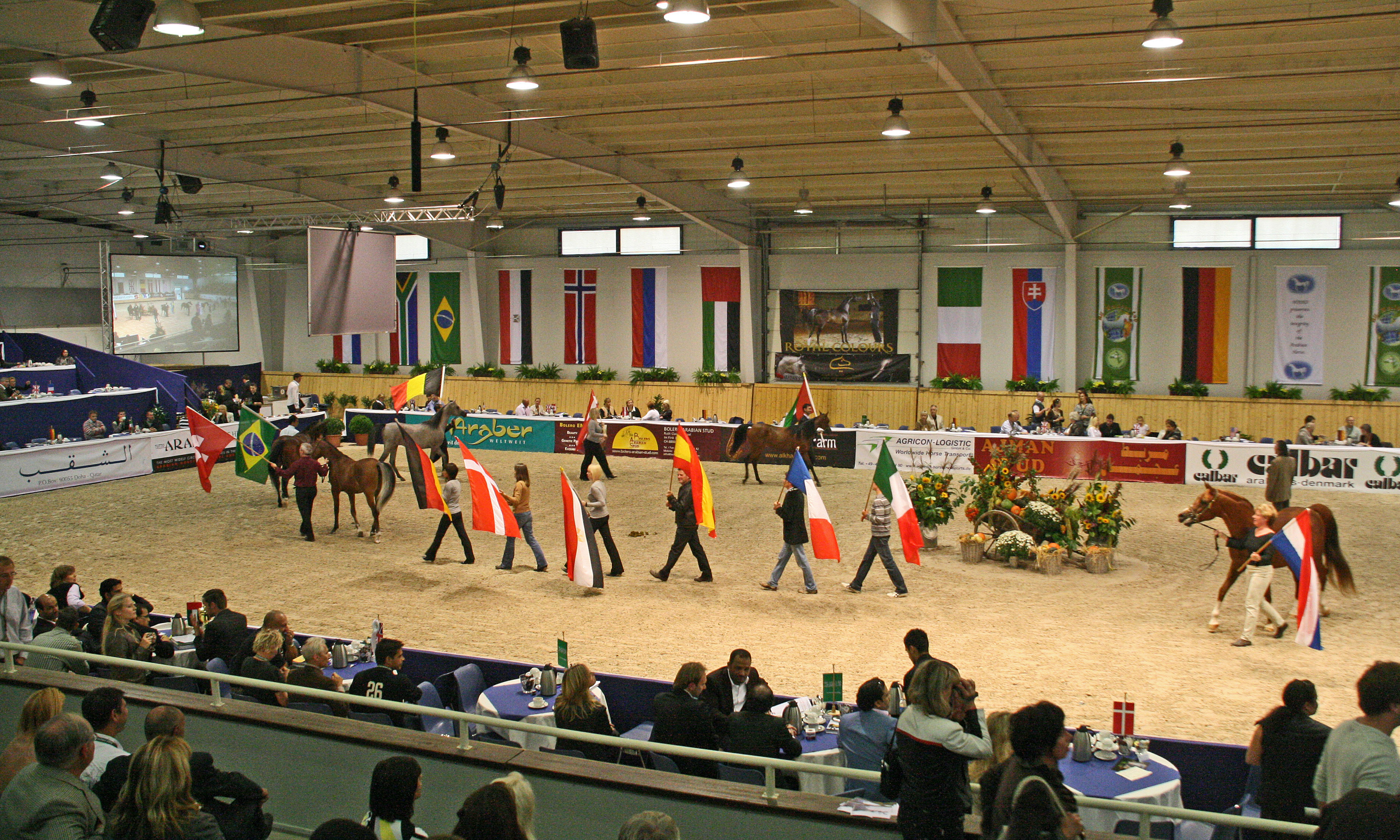 The parade of flags in 2008 (still including horses).
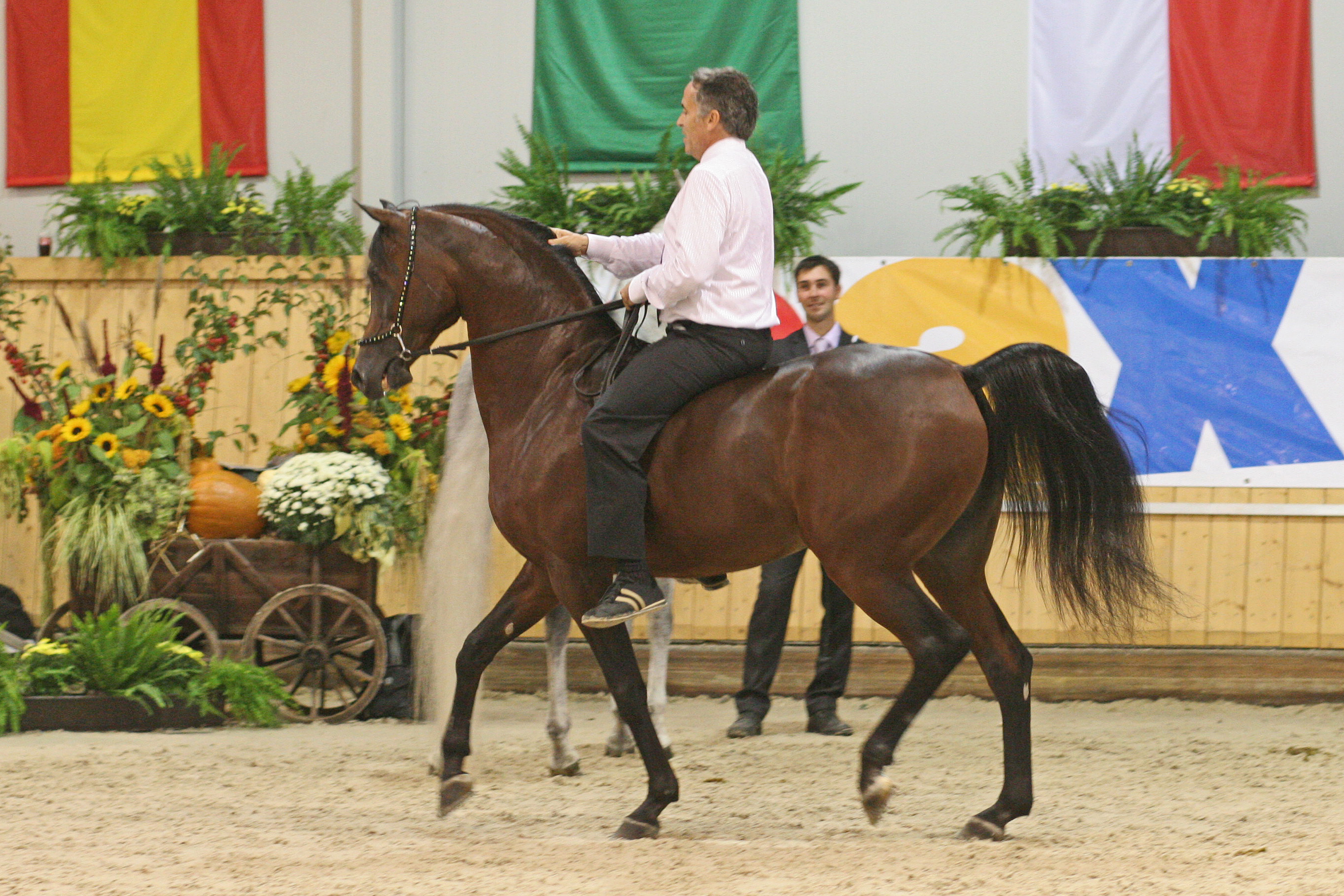 Michael Byatt and Marwan Al Shaqab take their victory pass in 2008.
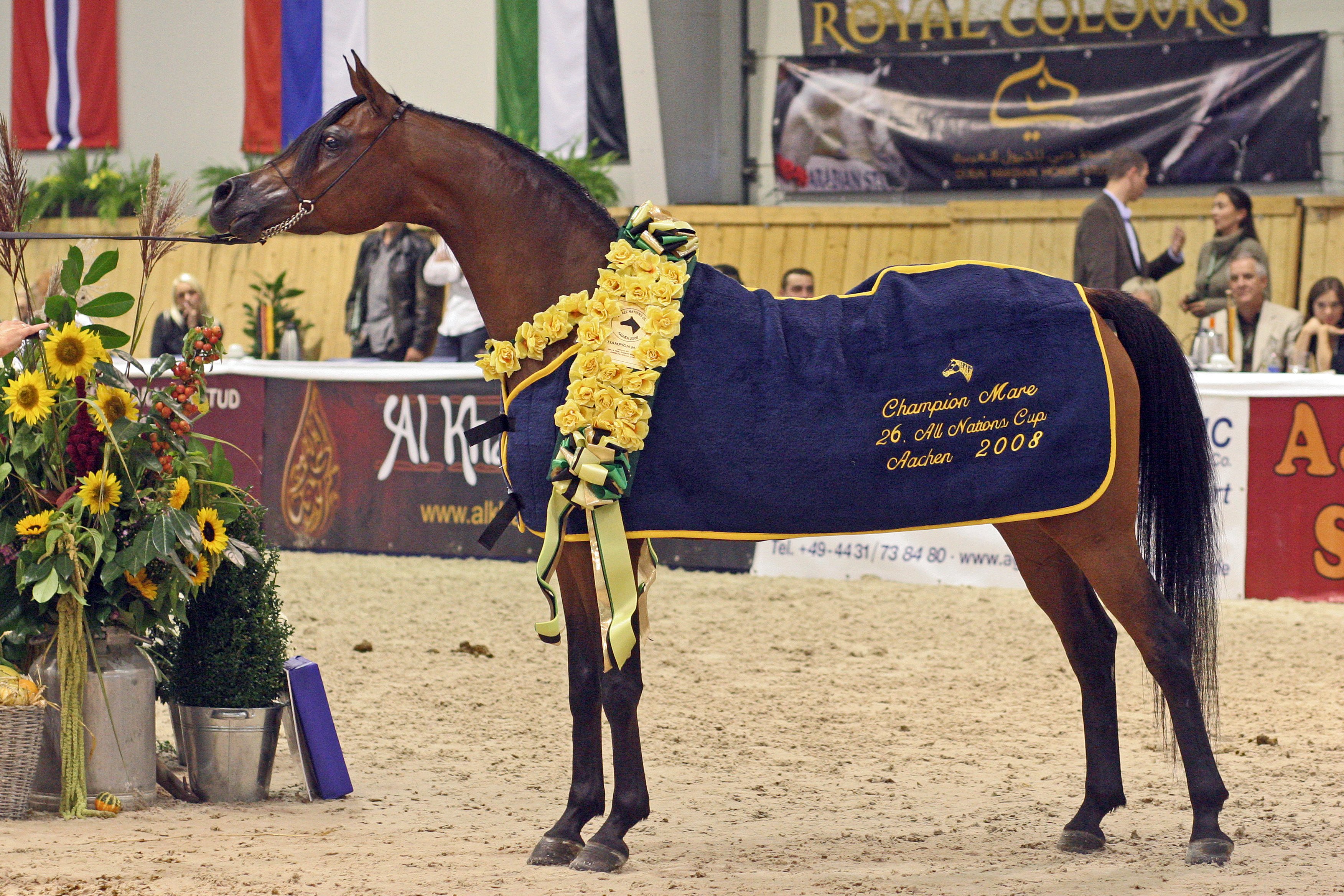 Pianissima (Gazal Al Shaqab x Pianosa) winning Senior Female Champion for Poland in 2008.
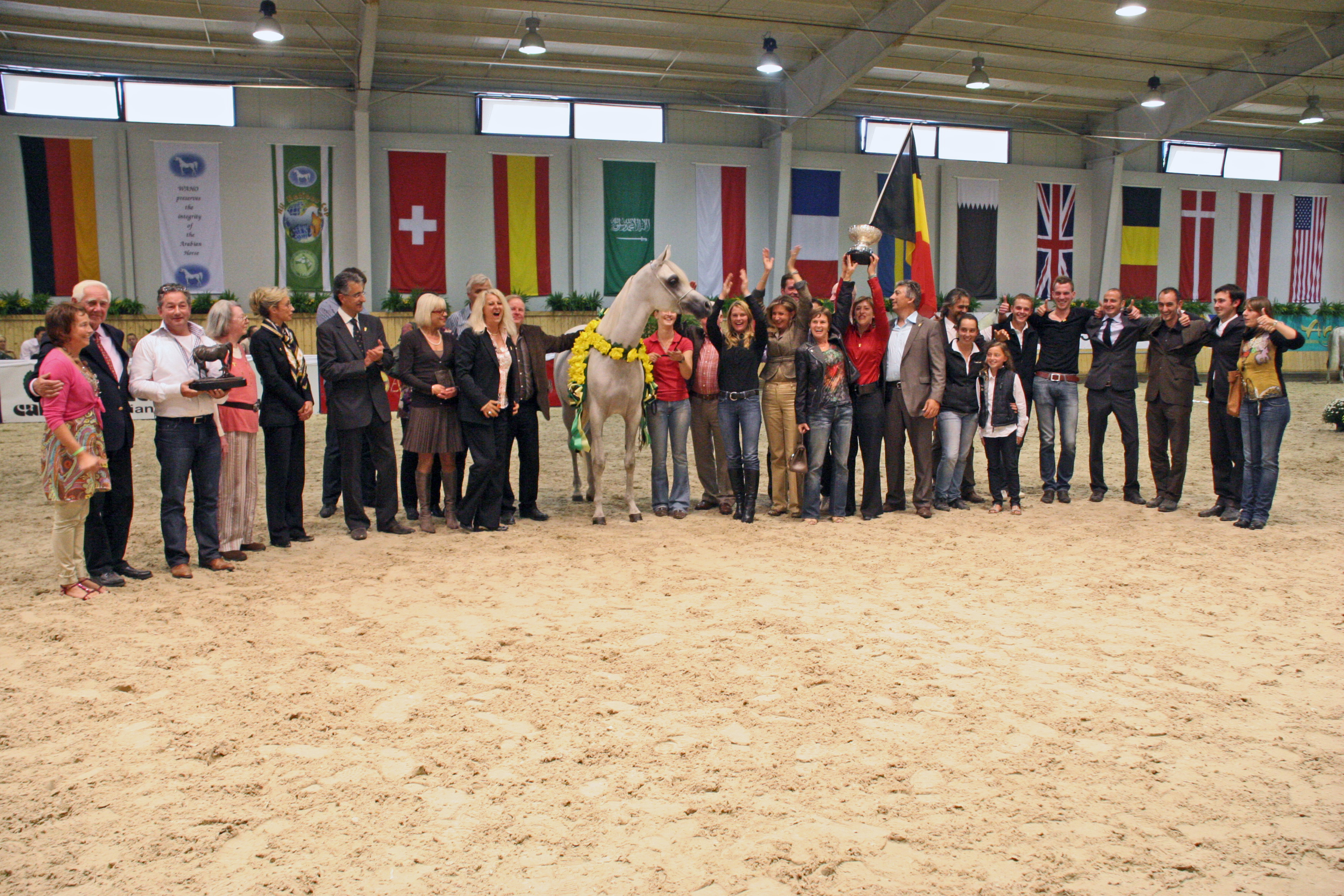 Belgium winning the Cup in 2009.
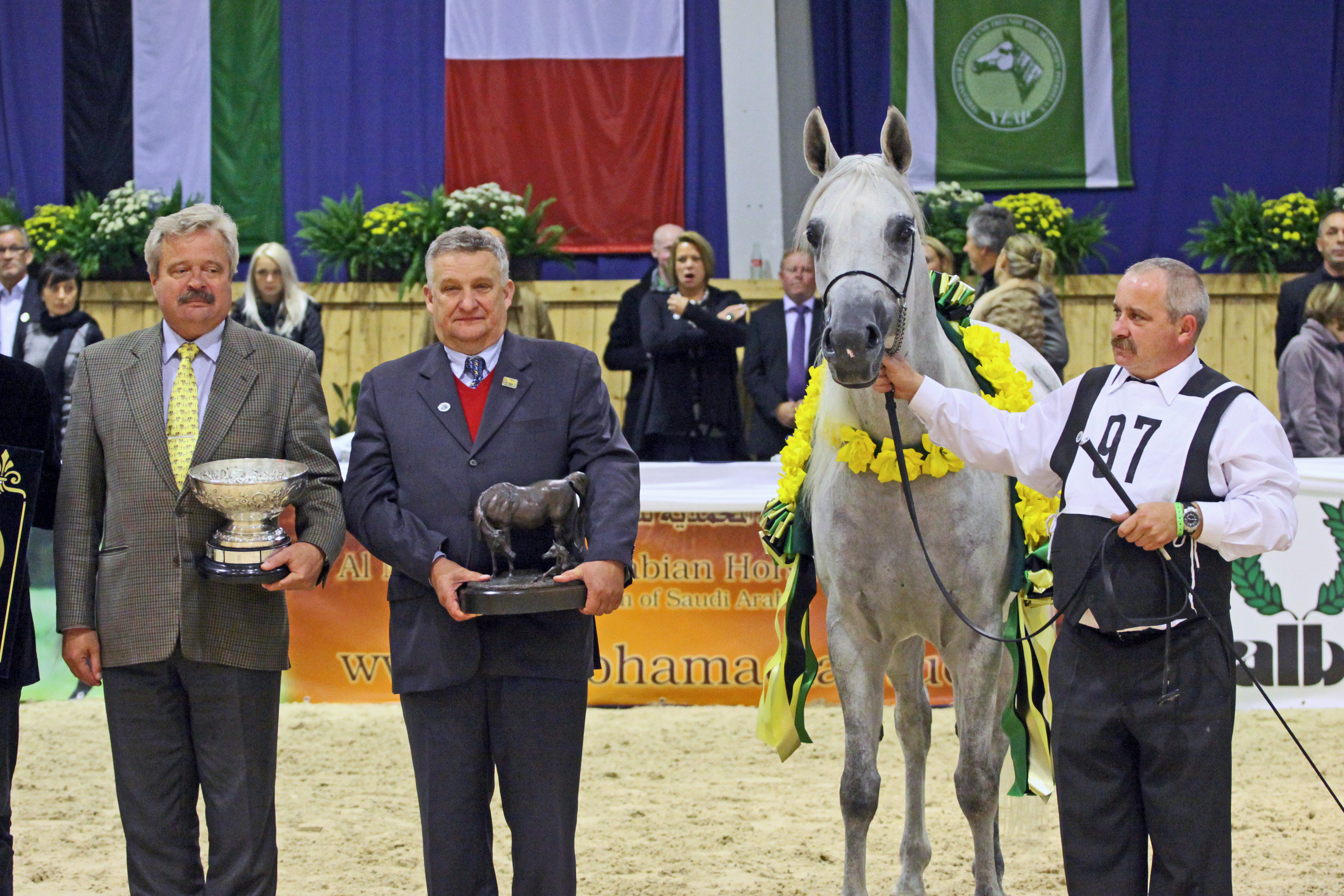 Poland winning the Cup in 2010, with Gold Champion Senior Mare Emandoria.
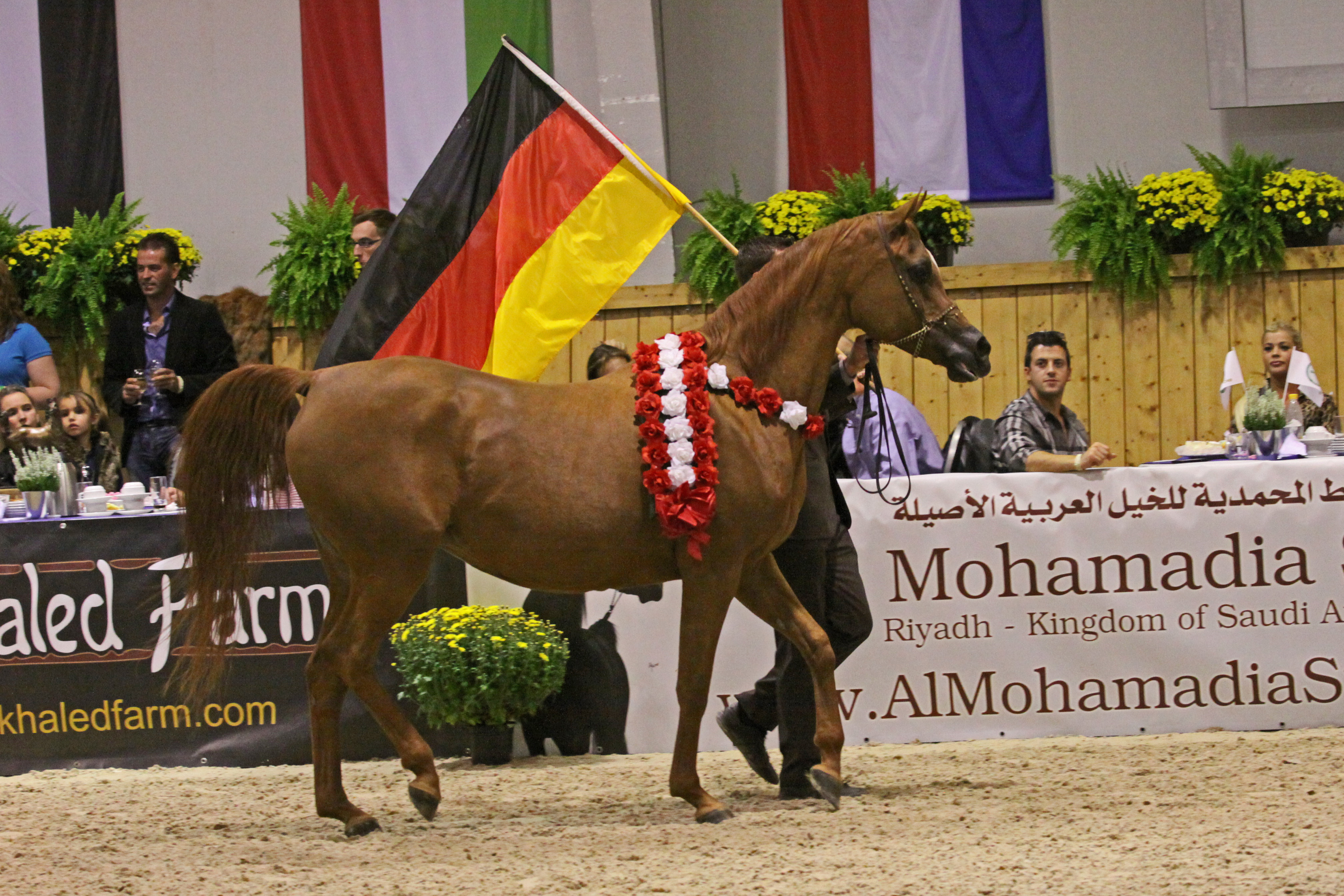 Triple Crown winner Essteema (Essteem x Menascha) representing Germany in the 2013 parade.
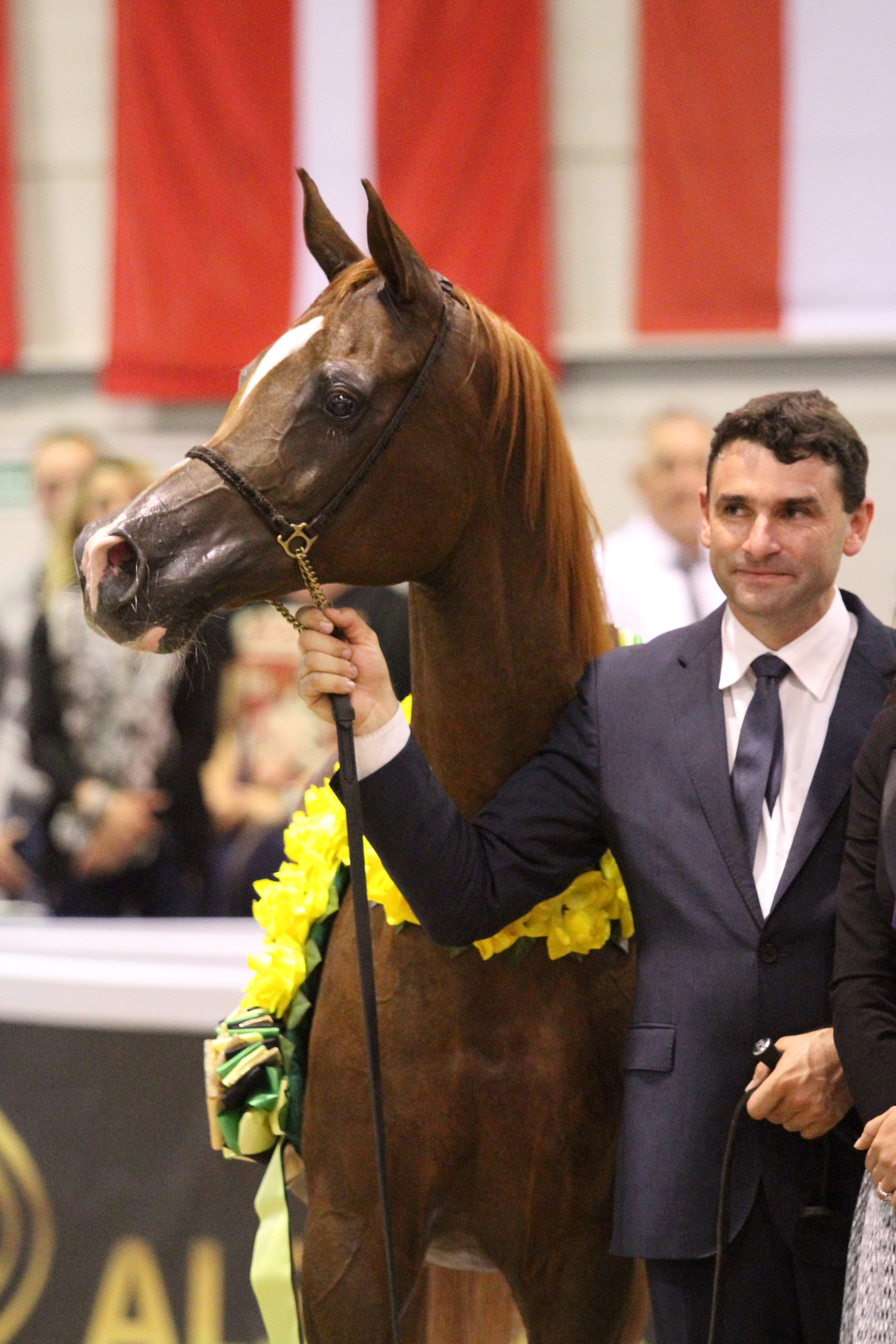 Kwestura (Monogramm x Kwesta), Gold Champion Senior Mare in 2014.
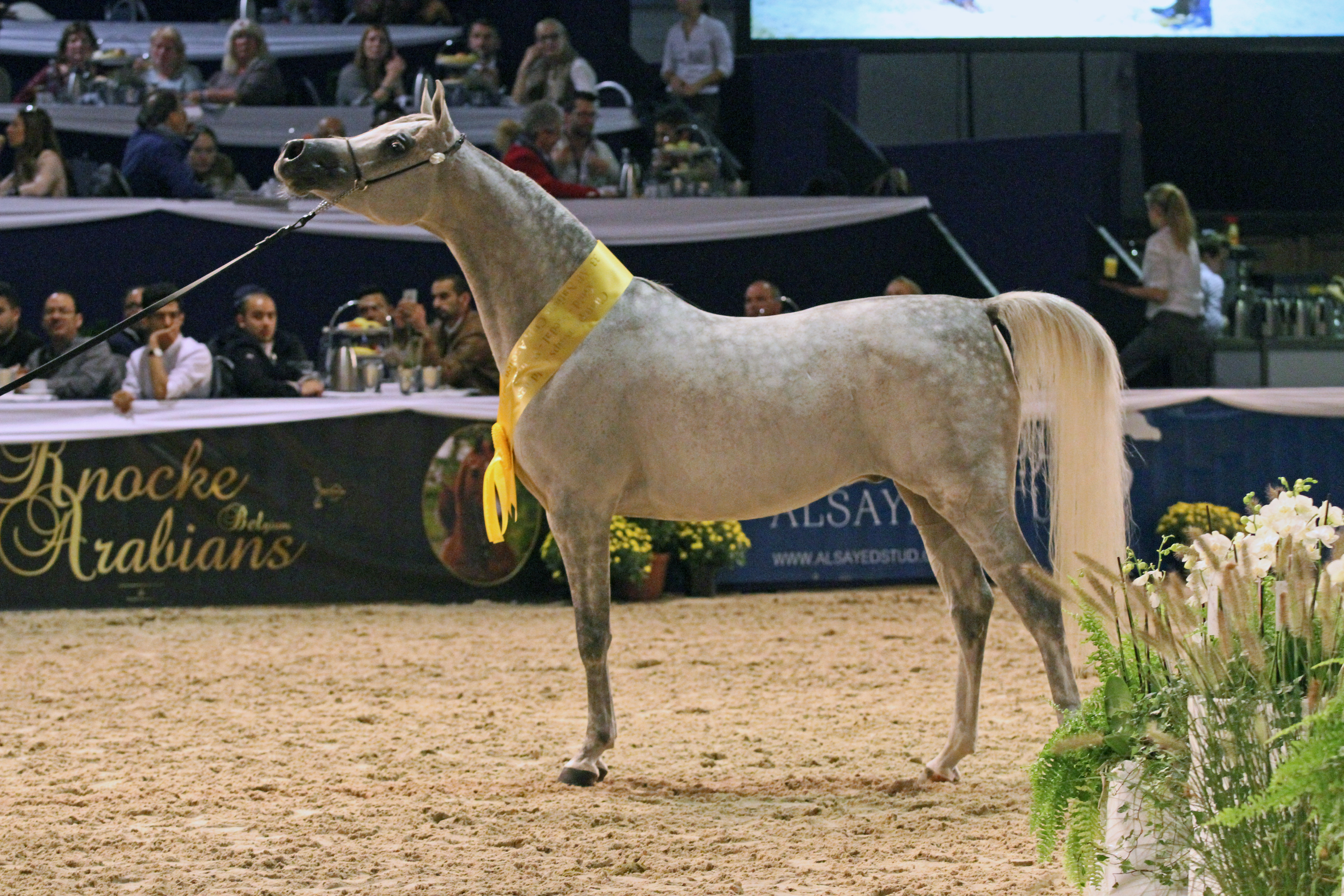 Aja Adonis (WH Justice x Sanadina), the first ever ANC Gold Champion Gelding in 2015.
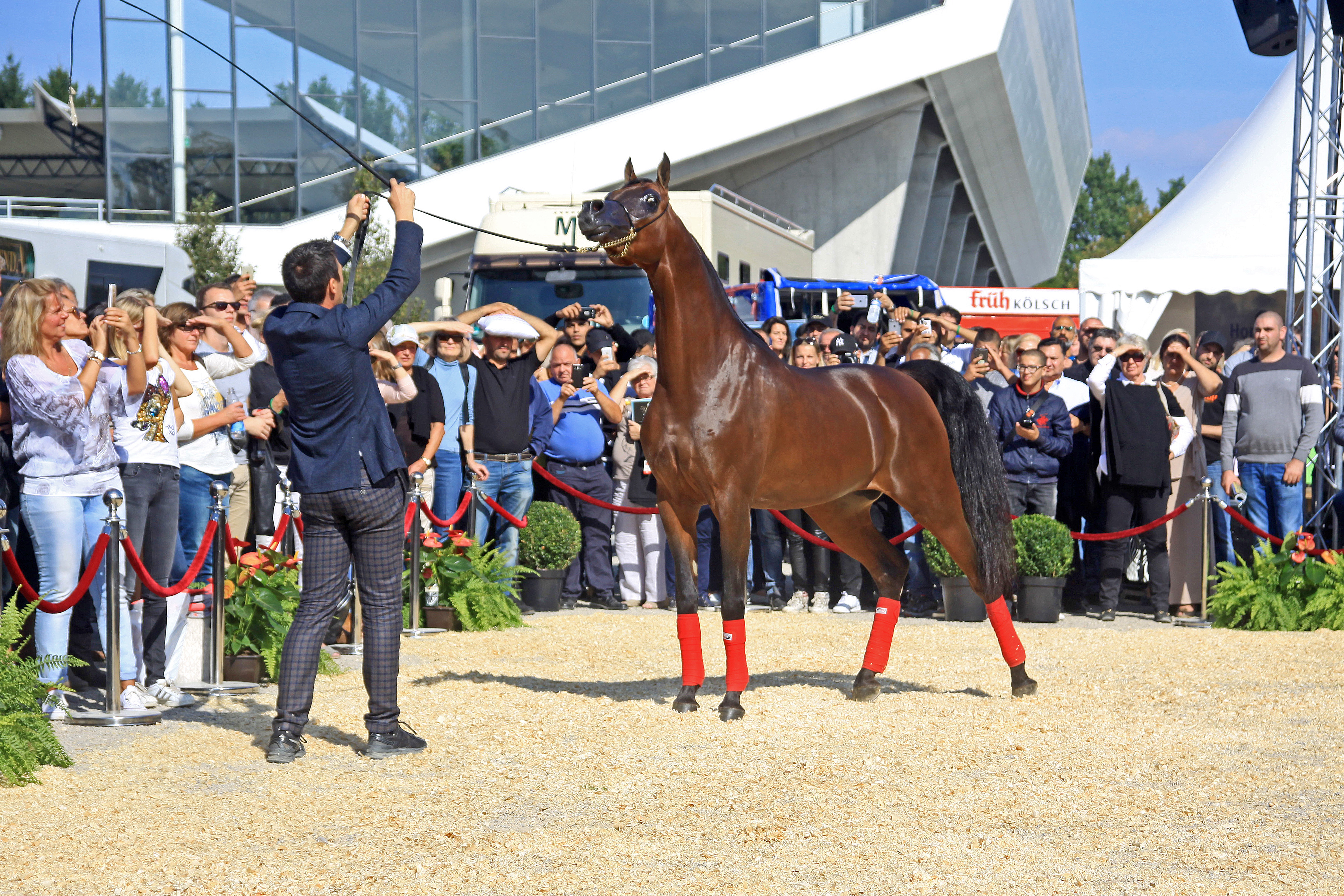 FA El Rasheem being presented at the ANC Plaza in 2016.
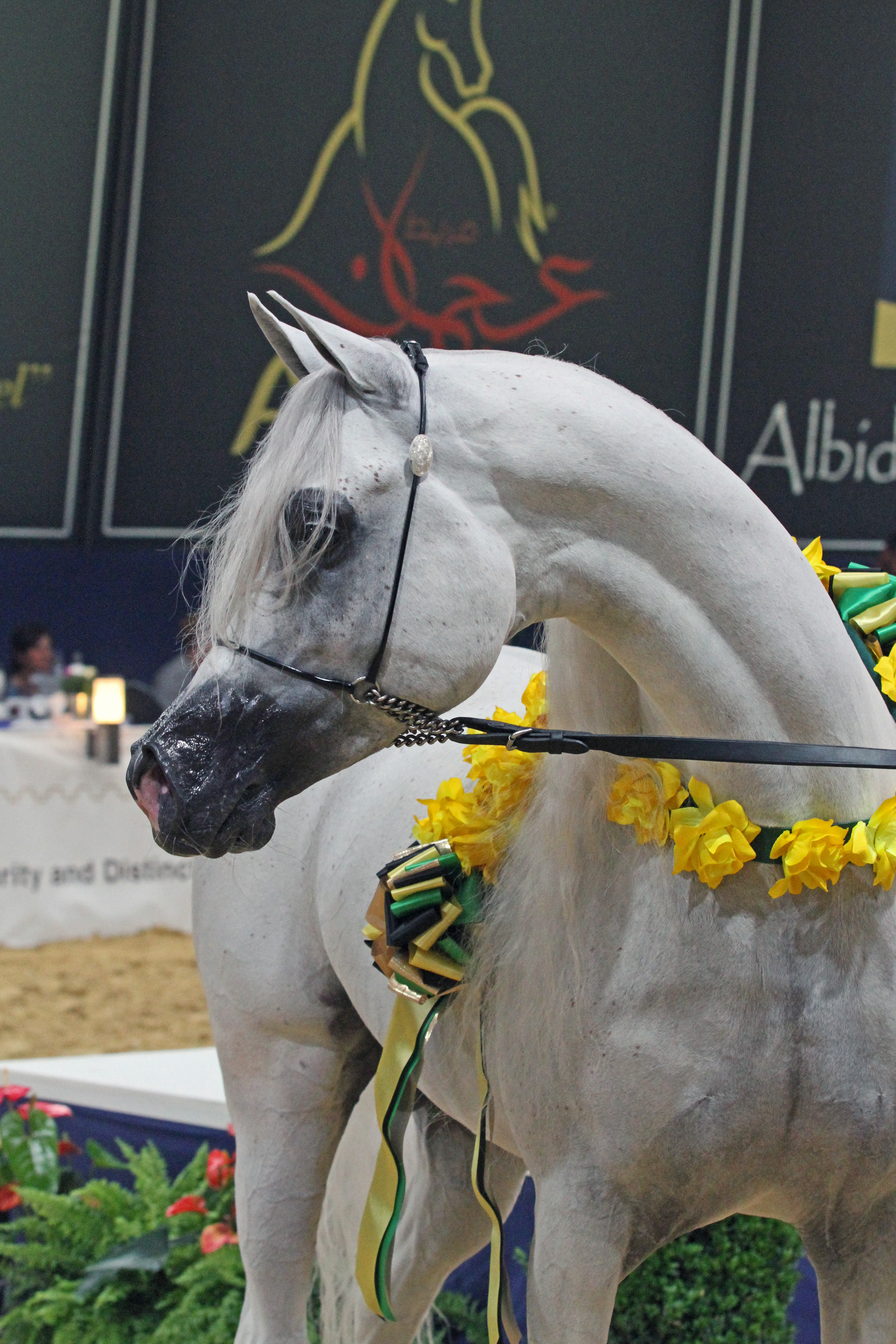 Gold Champion Senior Stallion and High Point Male Excalibur EA (Shanghai EA x Essence of Marwan EA) in 2017.
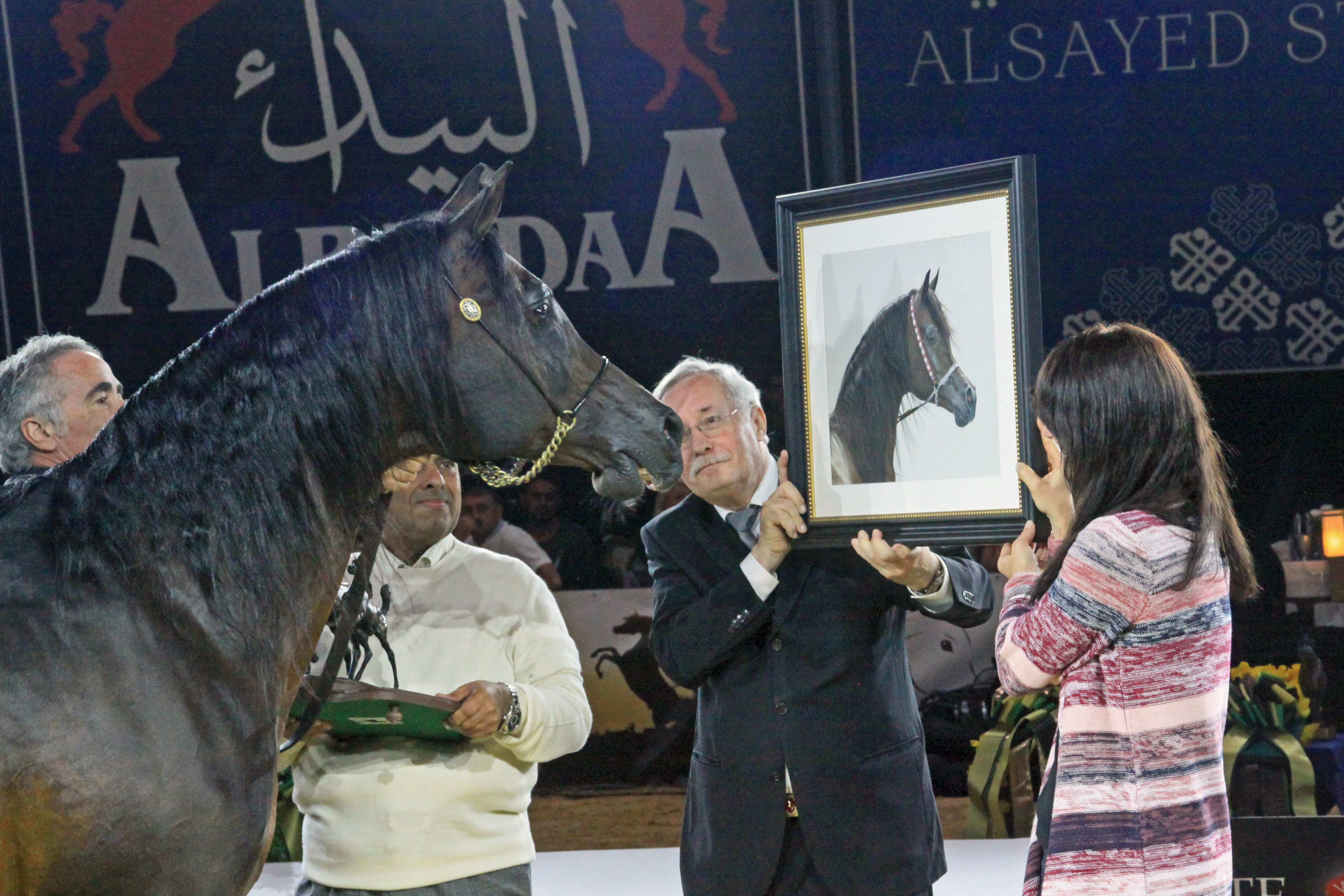 Gazal Al Shaqab admiring his portrait during a special presentation in 2017.
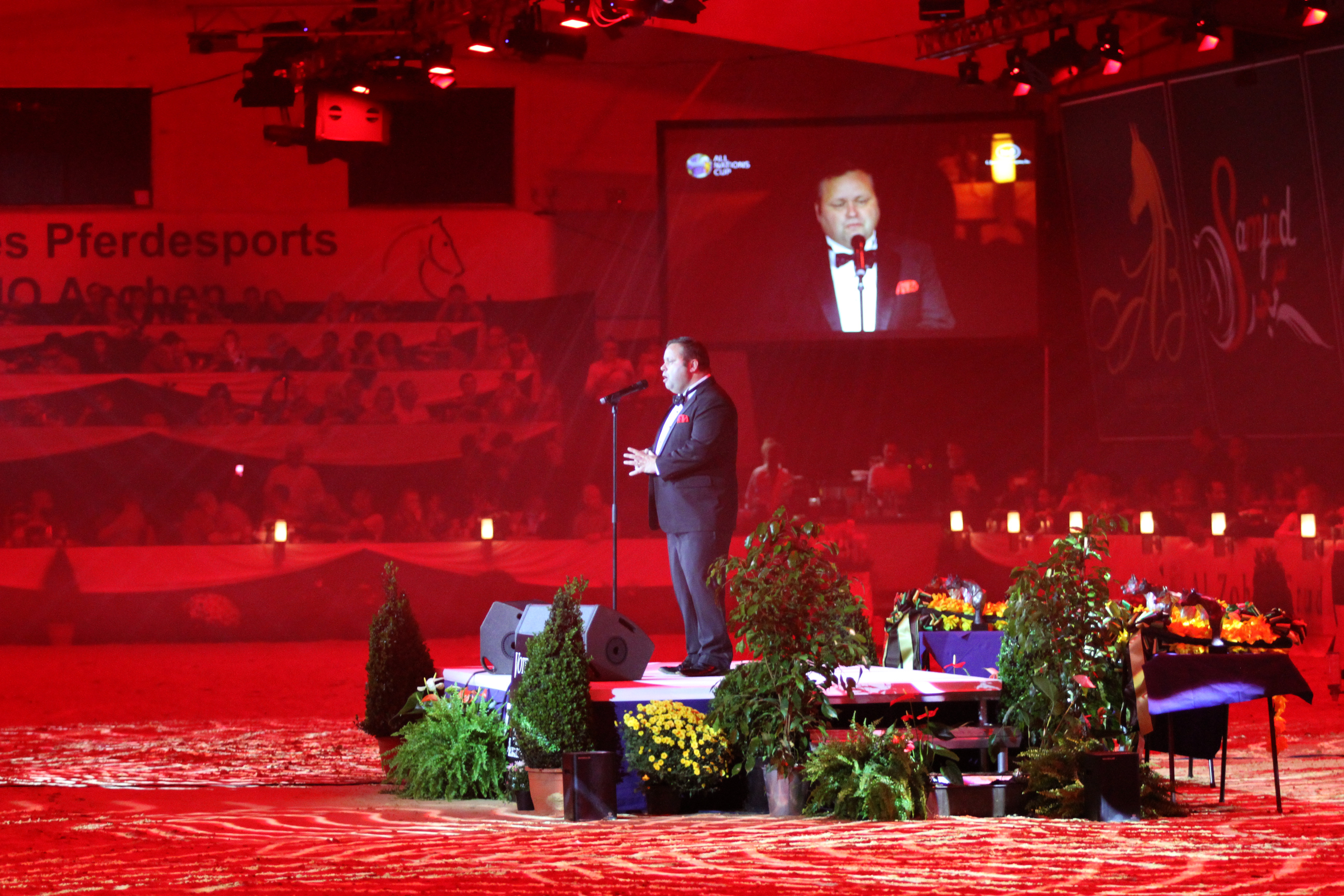 Paul Potts turning the ring into a concert hall in 2017.
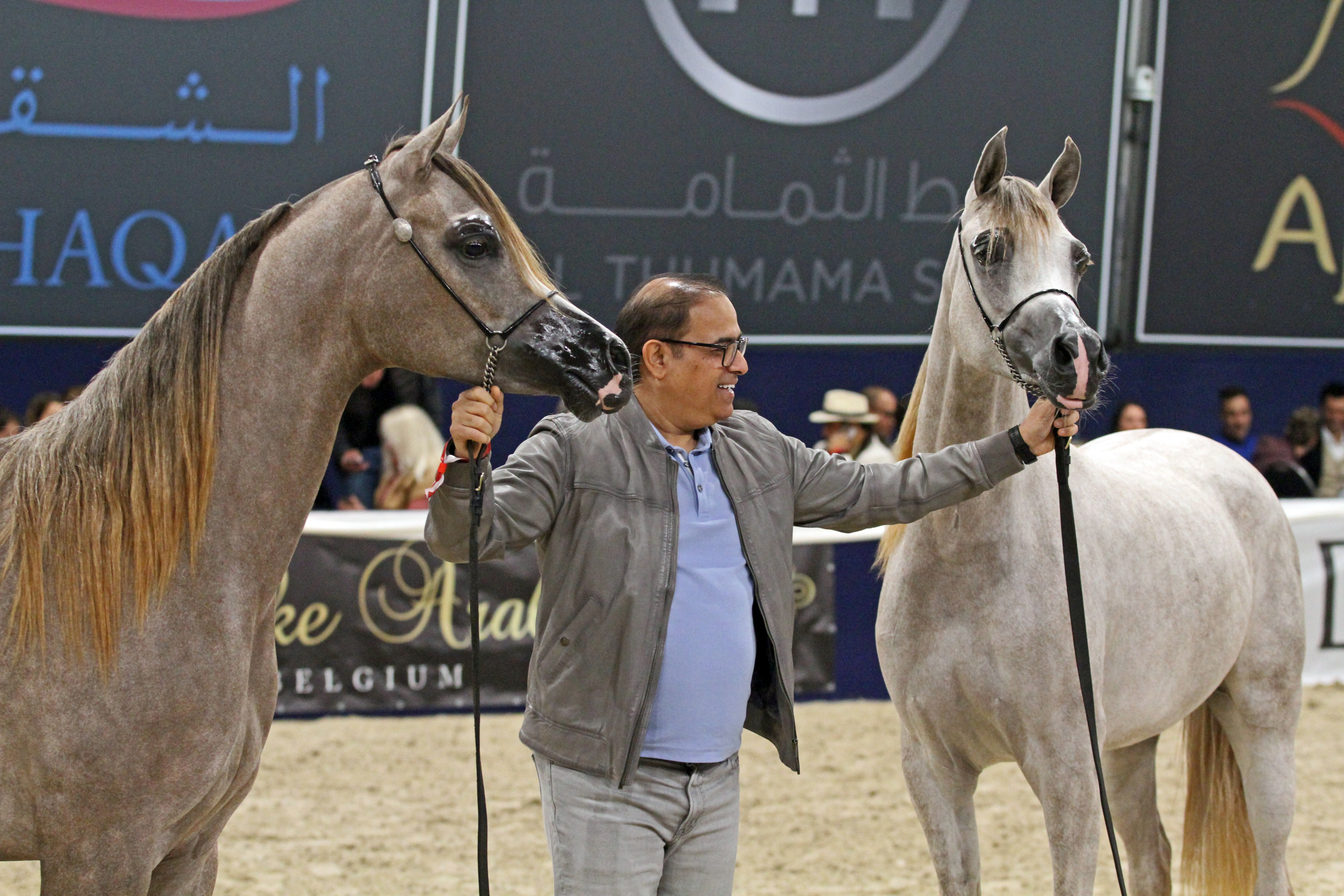 Dubai Stud’s double win with Gold and Silver Champion yearling fillies D Najlah and D Raseel in 2022, both by D Seraj out of Elle Flamenca.
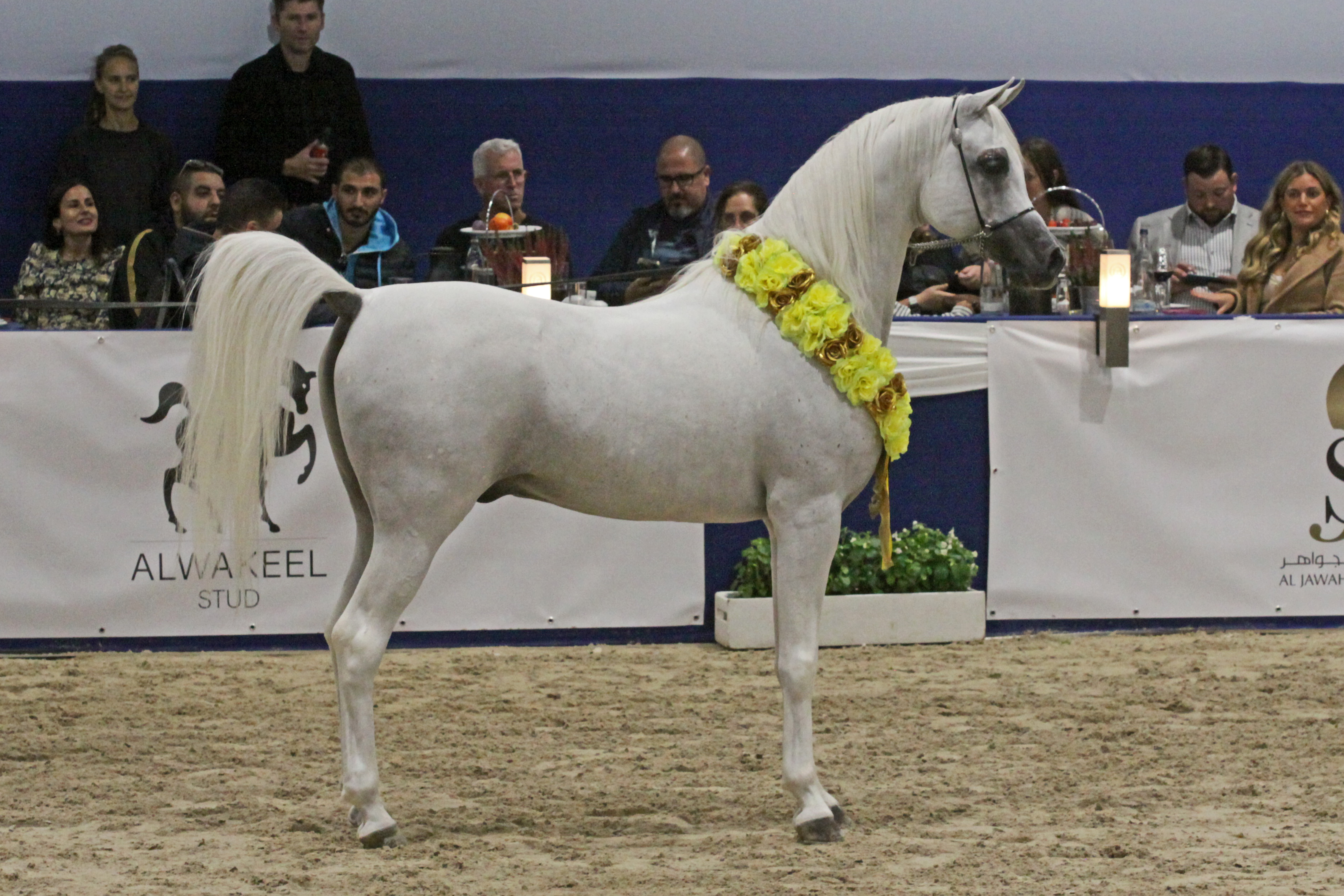 PSE Al Rakhan (Royal Colours x PSE Mistrez), the first Gold Senior Champion Stallion of the ANC Straight Egyptians at Aachen in 2024.
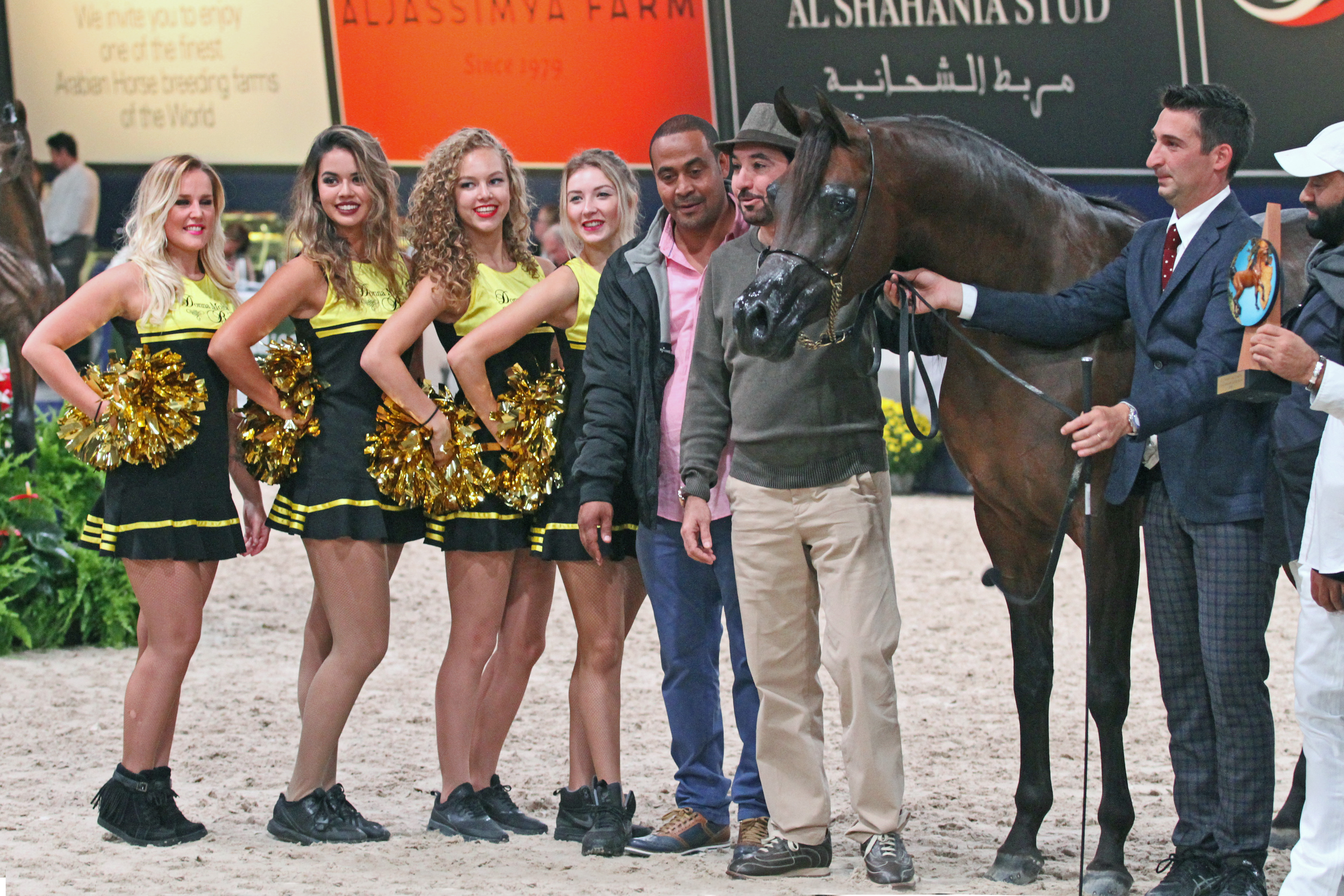 Silver Champion Senior Mare Donna Molta Bella SRA with her cheerleaders in 2016.