
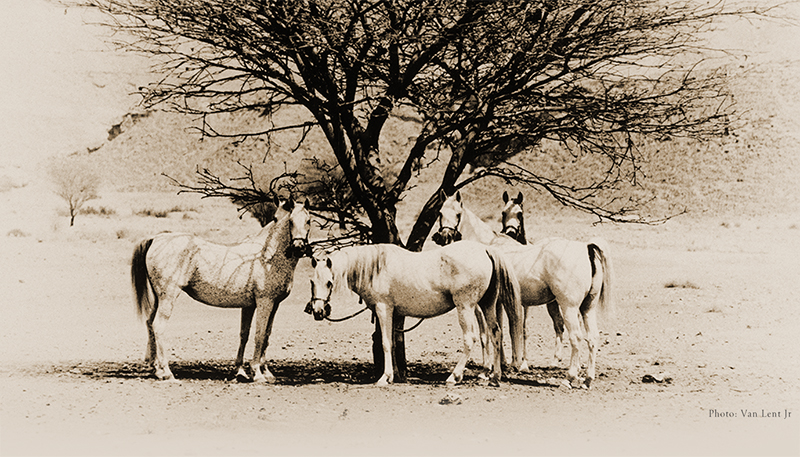
The Forgotten Equines – at Its Core, A Story of Love
by Denise Hearst
Shortly before this year’s Scottsdale show, Dr. Nancy O’Reilly fell off a horse, so no riding at Scottsdale for her this year, but she’s pressing her doctor to get her back on a horse and running as soon as possible. She’s a cowgirl at heart. “I ride, drive, and love Arabian horses,” says Nancy. “The horses have saved my life over and over again. Whenever I am down, a visit with my dear horses picks me up.
“I have my own facility now, The Equine Center in Somis, California, about 45 minutes from Los Angeles.”
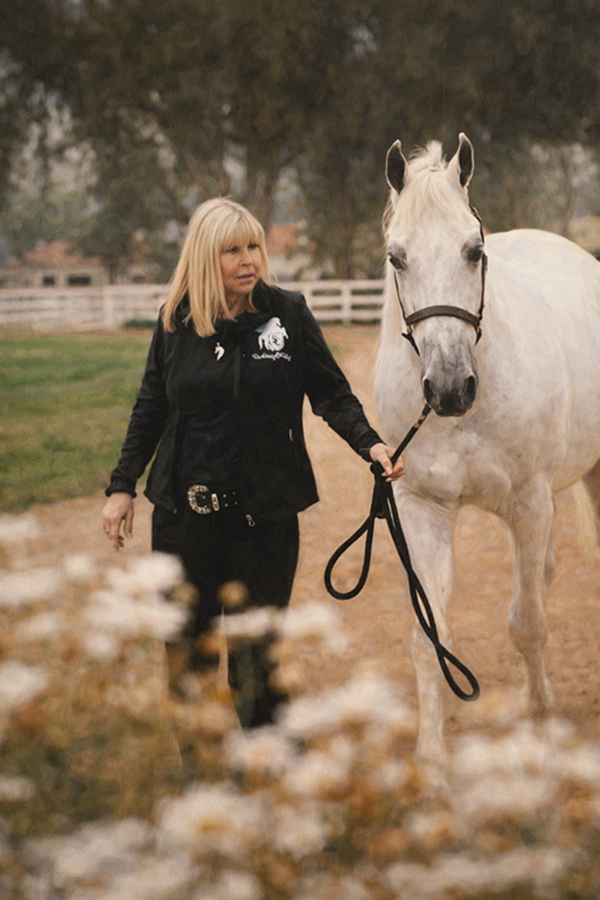
“My angel horse, Phi Beta Kappah. A country English driving champion. I miss him every day.” ~ Dr. Nancy O'Reilly
“I’m probably the oldest rider in the classes—but I don’t care.”
Nancy wasn’t a horse girl growing up, but she was a tomboy. “I’d jump on a horse if somebody had one. But I’ll be honest: I was going through a divorce when a good friend took me to her barn, and I fell in love with an Arabian. That was the first time I was saved by a horse. When the divorce was final in 2022, I bought my first Arabian, EF Trific Shoc (SF Specs Shocwave x DA Trifinity by Triften); I was charmed.
“I ate the peanuts and got serious about Arabians. I bought one horse after another… and then I brought my horses to the Equine Center in Somis. I ended up buying the facility.
“I show, breed, and ride. I figure I can drive forever,” she says.
“I’m probably the oldest rider in the classes, but I don’t care. I’m going to keep riding. It’s part of who I am.”
“I’ve lost some beautiful show horses over the years, but I feel as if they are always around.”
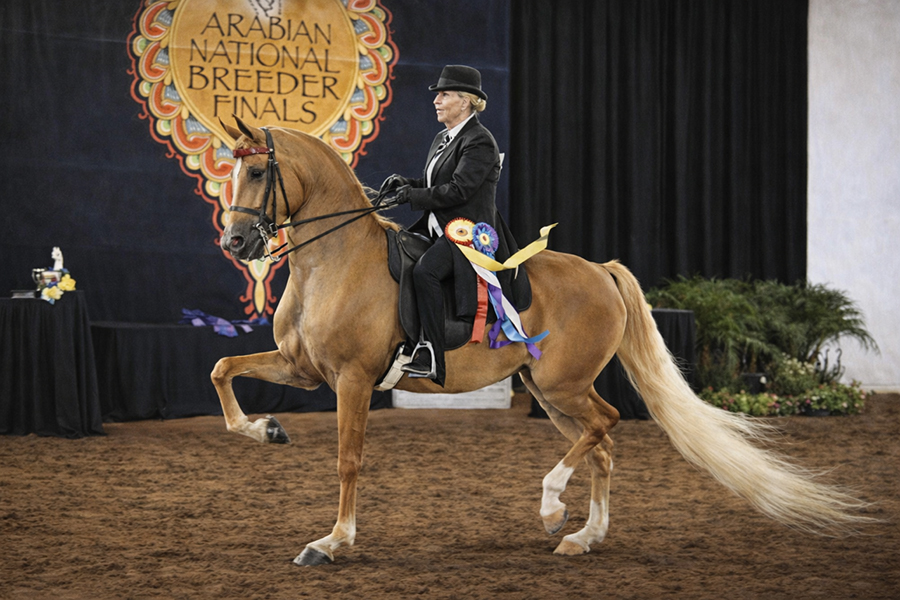
The magnificent palomino mare, BF In the Money, one of Nancy’s show horses.
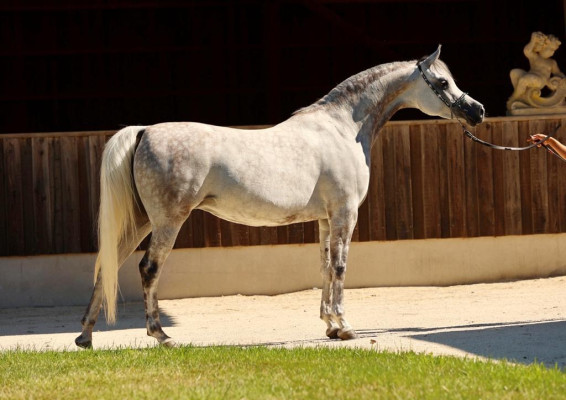
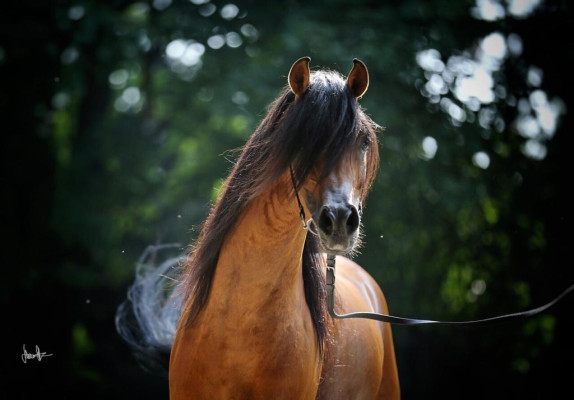
Nancy breeds Arabians and Half-Arabians. Her retired show and breeding horses are with the Burkman Centre in Arizona, and some horses are with ChriShan Park. While Nancy loves the shows and the Arabians, she is also proud of her work outside the show circuit, where she is busy finding homes for rescue horses and pushing for legislation that will result in greater sensitivity and respect for horses.
Her efforts focus on horses in the pipeline for slaughter, and she finds places for them. Some become buddy horses, and some are still rideable.
While her home address is in Montecito, Nancy prefers to stay close to her horses at her ranch in Somis. Among those horses are ten that she rescued herself.
Other rescues are Mable, a dwarf pony, and Matilda, a mini. “And they love each other,” says Nancy. “A yearling half-Friesian keeps company with the minis. Every horse is treated as well as the others, and they all go out in the morning and come back in the evening…even the goats.”
Nancy introduces everyone who comes to her farm to her horses. “Once an Arabian becomes a friend, it’s long-lasting,” she says. “Our logo includes the words A Place for People Who Love Horses.”
The traits Nancy treasures most in the Arabian are intelligence and a willing temperament. “I’ve lost some beautiful showhorses over the years, but I feel as if they are always around. Multi-champion Phi Beta Kappah was one of my riding/driving champions, and I’d swear he comes back and visits. I think they become earth angels. At least it is comforting to think so.”
Nancy feels strongly that anyone who has horses must have a plan. “I get a bit upset with people who buy and sell horses as though they are commodities. One thing that happens with the Youth National horses is that, ultimately, the kids go off to school. A horse living up to 20-plus years develops relationships. Can you imagine how the horse feels when a little boy or little girl shares most of their life with a horse and then, all of a sudden, it is sold?
“People often don’t have a good plan for what the horse will be doing long term. Horses have long and strong memories, and I wish people would take that into consideration.”
A Future Worth Protecting
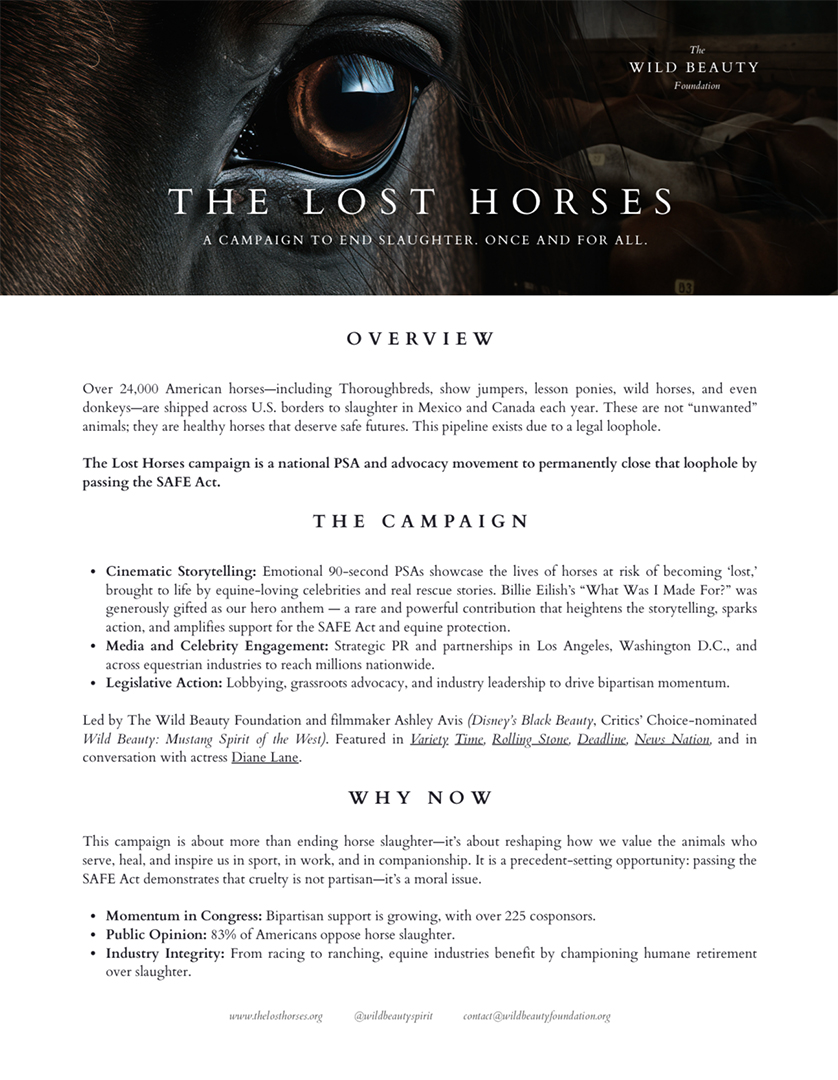
Nancy’s passion for this subject has led her to try to pass legislation to protect horses that are being sold as riding horses, even though they may be lame, and to protect horses that are being sent over our northern or southern borders without papers. Both Mexico and Canada consume horse meat, and the U.S. does not. Nancy is working to pass laws that will prevent otherwise healthy horses that can still serve as companions or gentle-riding horses from being sent to other countries for slaughter. She teamed up with Ashley Avis, who directed the film “The Lost Horses,” to champion their signature piece of legislation, the Save America’s Forgotten Equines (SAFE) Act, which has passed the House. Their campaign to rescue lost horses is ambitious — over 20,000 horses crossed the Canadian border last year.
The minis turn in for the night.
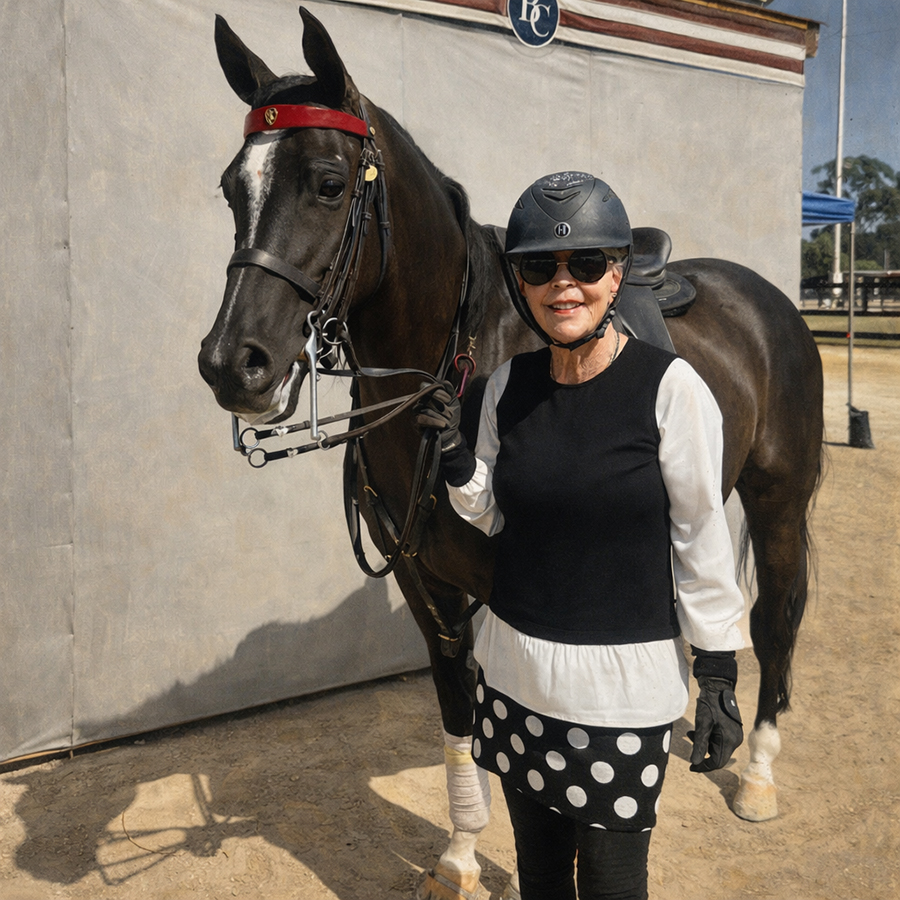
Nancy with Charolettlet Ames.
Ashley Avis Speaks
“Rescuing these horses is emotionally harrowing,” says Ashley. “We rescued a number of horses over the years and although you realize you can’t save them all, you’re so grateful for the ones that you can save. Ninety percent of horses that go through slaughter are in good condition and can go to new homes, serve in therapy programs for children or become jumpers and exercise horses.
“The breeds that most often end up in the slaughter pipeline are Thoroughbreds …if they don’t win they they go to slaughter. And the same with Quarter Horses. People are breeding too many horses without a thought for what that horse is suited for.
“Right now we are raising awareness of the slaughter of wild horses, and the use of double-decker trailers. The wild horses are being killed in those pens…and in the roundups using helicopters.”
“At Scottsdale we presented the The Lost Horses campaign in our booth,” adds Nancy. “I want people to know that Arabian horses are amazing animals, with their unique personalities. Most people have not been introduced to horses in a way that makes them feel good.
“Any time I HAVE A VISITOR AT THE RANCH I TAKE THE time
to introduce them to all my horses.”